Shardiya Navratri 2026
Shardiya Navratri 2026: Date, Ghatasthapana Shubh Muhurat, Puja Vidhi, and Significance
The Shardiya Navratri festival in 2026 will be celebrated on Sunday, October 11, and will run for nine nights in October between the new Moon and full Moon phases.
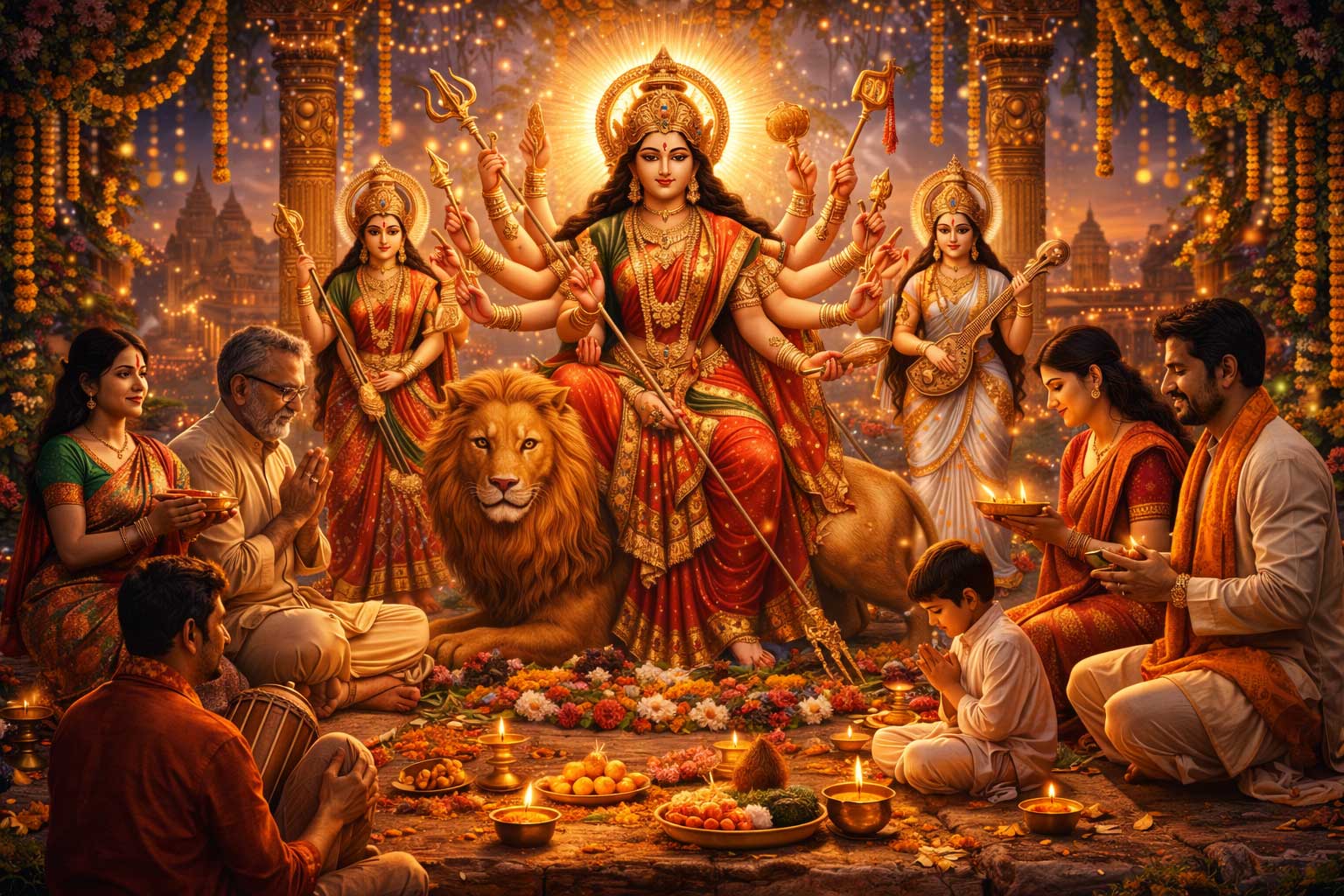
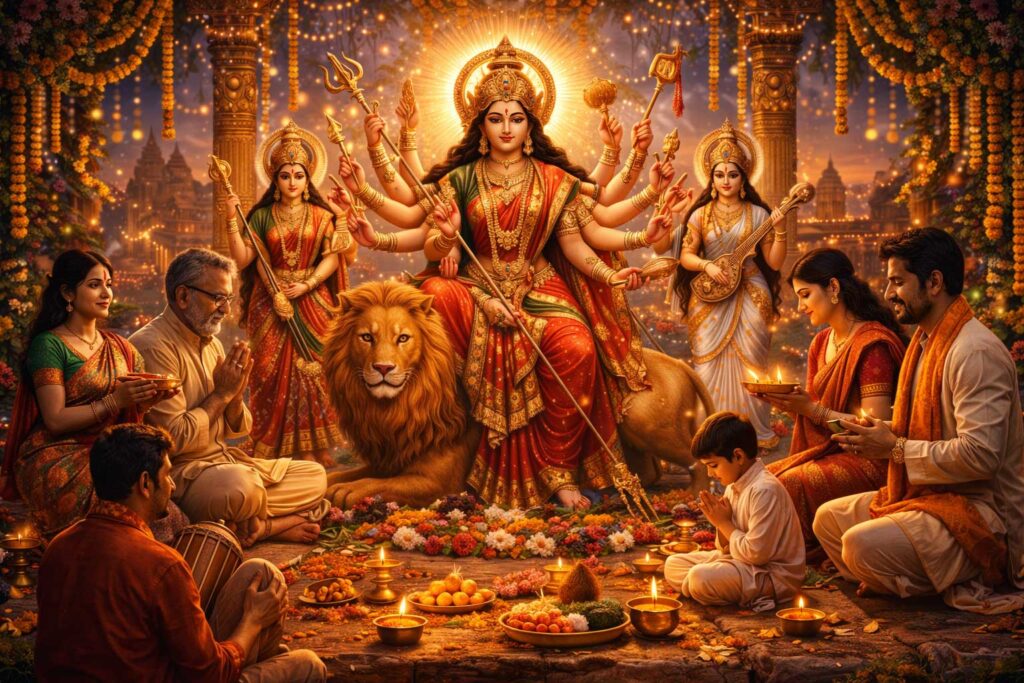
This festival celebrates the nine forms of the Goddess Durga (Navdurga), who has defeated the buffalo-demon Mahishasura, thus symbolising the constant victory of “Dharma” over “Adharma.”
As the Sun (your soul) corresponds to your higher self, it is astrologically significant for Navratri to begin on a Sunday because of Durga (the energy behind your spirit) being the Super Soul (Shakti).
Navratri is expected to provide significant energy to awaken and transform your spirituality by aligning the Goddess’s fasting and Ghatasthapana with the cosmic energy windows.
To learn more about the best times to fast and perform Ghatasthapana based on the cosmic energy windows available to you during Shardiya Navratri 2026, visit our Panchang section.
Shardiya Navratri 2026: Shubh Muhurat & Tithi Timings
| Event | Timing / Tithi |
| Navratri Begins | October 11, 2026 (Sunday) |
| Pratipada Tithi Begins | 09:19 PM on Oct 10, 2026 |
| Pratipada Tithi Ends | 09:30 PM on Oct 11, 2026 |
| Ghatasthapana Muhurat | 06:19 AM to 10:13 AM |
| Abhijit Muhurat (Best) | 11:44 AM to 12:31 PM |
| Rahu Kaal (To Avoid) | 04:26 PM to 05:53 PM |
AstroZindagi Tips: For positive results, on 11th October 2026, during the evening Aarti, place a small fragment of “Kapur” (camphor) in each room of your home and light it. This quick remedy will help you clear any existing “Vastu Dosha” (defects) and neutralise stale, negative energy, allowing your house to become a powerful channel for the Goddess’s blessings.
Astrological Significance of Shardiya Navratri 2026
The festival of Navratri holds a significant place in many Puranas (sacred scriptures), particularly in the Devi Mahatmya. This is a time when the creative and protective aspects of the universe are at their highest vibration.
From an astrological standpoint, Navratri occurs during Sharad (autumn) – a time of transition/shift, where we have begun to transition from the energy of the earth predominately during the daytime hours to the energy of the earth distinctly at night.
The planetary alignment of October 11, 2026, suggests an overwhelming amount of mental strength and “Shakti” (divine female energy/life force) to help devotees overcome delays by harnessing the cosmic force of the Moon and the Chitra Nakshatra (greatly influenced by Mars).
It is also important to understand the energy associated with the Nakshatras (lunar constellations) during Ghatasthapana (the installation of the Sudarshan Yantra in the container). Since Navratri will begin on Sunday, the Goddess will arrive on an Elephant (known as Gaja). The arrival of the Devi on the back of an elephant, according to Vedic Astrology, will indicate heavy rains, good harvests, and an increase in the overall wealth of the nation. The arrival of the Devi also symbolises “Sukh-Samridhi” (happiness and abundance).
The 9 Forms of Nav Durga and the 2026 Colour Calendar
Let us explore the spiritual journey of understanding the unique energy of each day and its corresponding colour. Colour therapy and psychological alignment with the Goddess through the appropriate daily energy and colour will provide clarity for this process on October 11, 2022.
1st Day (Shailputri): This Goddess is the Daughter of the mountains. (Orange) – The sight of energy and joy.
2nd Day (Brahmacharini): She is the Goddess who performs religious austerity. (White) – The symbol of peace and cleanliness.
3rd Day (Chandraghanta): She is represented by a half-moon in the shape of a bell. (Red) – The embodiment of courage and femininity.
4th Day (Kushmanda): She is the creator of the Universe. (Royal Blue) – Elegance and wealth.
5th Day (Skandamata): She is the Mother of Skanda (Lord Kartikeya). (Yellow) – The illumination of happiness.
6th Day (Katyayani): She is the warrior Goddess. (Green) – Initiating new growth or embarking on a new way of life.
7th Day (Kaalratri): The destroyer of darkness. (Grey) – The transformational power of strength.
8th Day (Mahagauri): The Goddess of Light. (Purple) – Luxurious, grand and noble.
9th Day (Siddhidhatri): The giver of all Perfections. (Peacock Green) – Uniqueness and individuality.
Detailed Step-by-Step Instructions for Performing Ghatasthapana
Traditionally known as the “Ghatasthapana” ceremony, this is one of the significant rituals that is performed on the first day of the Navratri festival. The purpose of this ceremony is to invite Goddess Shakti into a pot (called a Kalash) that symbolises the earth.
Preparing the Soil: The first step is to prepare the soil. Use a wide-mouthed earthen pot and spread out a layer of clean soil in it. Then, you will plant seven different kinds of grains in the pot (e.g., barley, wheat, moong beans, etc.), which symbolise both the fruits of nature and the fruits of all of your good intentions being planted in the earth.
Preparing the Kalash: The next step is to prepare the Kalash. Fill a Kalam (copper or earthen pot) with water, Ganga Jal, a coin, a betel nut, and some perfume or “scent”. Then, use five mango leaves or Ashoka leaves and place them at the opening of the Kalash.
The Coconut Ritual: The third step is to do the coconut ceremony. Take an unripe coconut, wrap it in a red silk cloth (called Chunari) and tie it off with a “Mouli” sacred thread. Then place the coconut on top of the leaves in the Kalash. This will serve as the temporary home of the Goddess of this Kalash.
The Invocations (Avahana): The fourth step is to conduct the Avahana (Invocations) ceremony. Light a lamp made of Ghee, and burn incense in this ceremony. The Abhijit Muhurat is between 11:44 AM and 12:31 PM. During this time, you will be invoked to the deity by reciting the “Navarna Mantra,” as follows: Om Aim Hreem Kleem Chamundayai Vichche (Translation: O Supreme Mother, please bless me to become wise; bless my body with health; and protect me from all of my negative thoughts).
Shardiya Navratri 2026: Remedies for Your Zodiac Sign (Rashi Upay)
When performing the special “Upays” (Remedial Acts or Offerings) in the festival of Navratri 2026, each Moon sign can perform upays based on their respective signs to help them receive the right positive vibrations.
Aries (Mesha): Offering Goddess Shailputri red-coloured flowers and pomegranates on the 1st day of Navratri helps bring control over Mars-influenced rashness and success in competitions.
Taurus (Vrishabha): Offering Goddess Brahmacharini white colored sweets and jasmine flowers on the 2nd day of Navratri invigorates Venus and ensures you have ample money and peace within the house.
Gemini (Mithuna): Offering Goddess Durga green fruits and Durva grass on the 3rd day of Navratri helps you clear communication issues and helps you have new ideas for your business.
Cancer (Karka): Doing an Abhishek (bathing) of the Devi idol with raw milk and honey on the 4th day of Navratri will help alleviate emotional turbulence in your life and help improve the health of your family members.
Leo (Simha): Offering Goddess Durga red sandalwood and Gudhal (Hibiscus) flowers on the 5th day of Navratri helps develop your leadership abilities and foster a positive image in society.
Virgo (Kanya): Donating green clothes/stationery to underprivileged girls enhances Mercury energy, which may assist in helping you to overcome problems with analytical thinking on the 6th day of Navratri
Libra (Tula): Offering Goddess Durga white silk cloth and perfume (Ittar) on the 7th day of Navratri will facilitate luxuries and balance your material desires with spiritual growth.
Scorpio (Vrishchika): Offering Goddess Durga jaggery and saffron-infused water on the 8th day of Navratri helps transform even the most fearsome fears into intuitive strength.
Sagittarius (Dhanu): Donating yellow fruits and turmeric on the 9th day for the Jupiter ruling sign will honour the Guru aspect of Mother Goddess.
Capricorn (Makara): Lighting a lamp with mustard oil in the North-East corner of your dwelling on the 10th day of Navratri, to help alleviate the effects of the harmful qualities of Saturn and provide stability in career.
Aquarius (Kumbha): Offering Goddess Durga coconut water and blue flowers on the 11th day of Navratri will help in obtaining social recognition and provide you with support for your humanitarian activities.
Pisces (Meena): Performing silent meditation for 20 minutes every day and providing honey and yellow blossoms to Goddess Durga on the 12th day of Navratri will assist in obtaining the deepest amount of satisfaction out of spiritual and mental fulfilment.
What Is the Akhand Jyot?
The Akhand Jyot (or lamp) is a unique form of lighting that burns continuously for at least 9 days (and likely longer). The lamp’s flame, in this case, represents the value of the sun, and the Ghee oil represents the value of the moon. Therefore, when you keep the Akhand Jyot lit (for this specific purpose), you are also keeping the light within your mind and body alive.
Tip: It is important that when lighting an Akhanyob (via Ghee), you place them on the right side of the Goddess of the lamp; and the left side of the Goddess, when lighting an oil lamp. A key rule for using an Akhand Jyot is never to extinguish the flame. When you need to change the wick in your lamp, first ignite a second lamp with a lighter before changing the wick in your Akhand Jyot.
Frequently Asked Questions (FAQs)
Can we eat salt while fasting for Navratri?
Typically, when doing a traditional fast (Vrat), you wouldn’t eat ordinary sea salt; instead, you would use “Sendha Namak” (Rock Salt), which is viewed as less processed and purer than standard table salt, and will help you to keep your electrolytes in balance while doing the fast.
What is the purpose of Kanya Pujan?
Kanya Pujan is an act of worship intended for young women on the ninth or eighth day (Ashtami or Navami) of Navratri. The worshippers say (regarding Kanya Pujan on October 18 or 19 in 2026) that if you perform Kanya Pujan with true “Bhaav” on either of those dates, it will grant you the benefits of the fast for the nine days.
Can I cut my hair or nails during Navratri?
According to the Hindu Calendar and Hindu customs and beliefs, you should not cut your hair or nails or shave or perform any of these activities as a means of demonstrating penance as well as respect for the creative energy of the Goddess during these nine days.
Why do we sow barley (Jowar) during Ghatasthapana?
Barley is considered by many to be the first grain ever created by nature. The growth of the sprouts (Khetri) is used to predict the following year. If they grow lush and green, it is a sign that you will have a prosperous year; if they are small and stunted, you need to increase your prayers or discipline for the following year.
What can I do if I cannot fast for 9 days?
If, due to work or health reasons, you cannot observe the traditional 9-day fast, you can observe a “Joda Vrat” by fasting on the 1st and 9th days (Ashtami or Navami). The spiritual benefits are still very great if you do this with true devotion.