Raksha Bandhan 2026
Raksha Bandhan 2026: Date, Shubh Muhurat, Puja Vidhi, and Zodiac Remedies
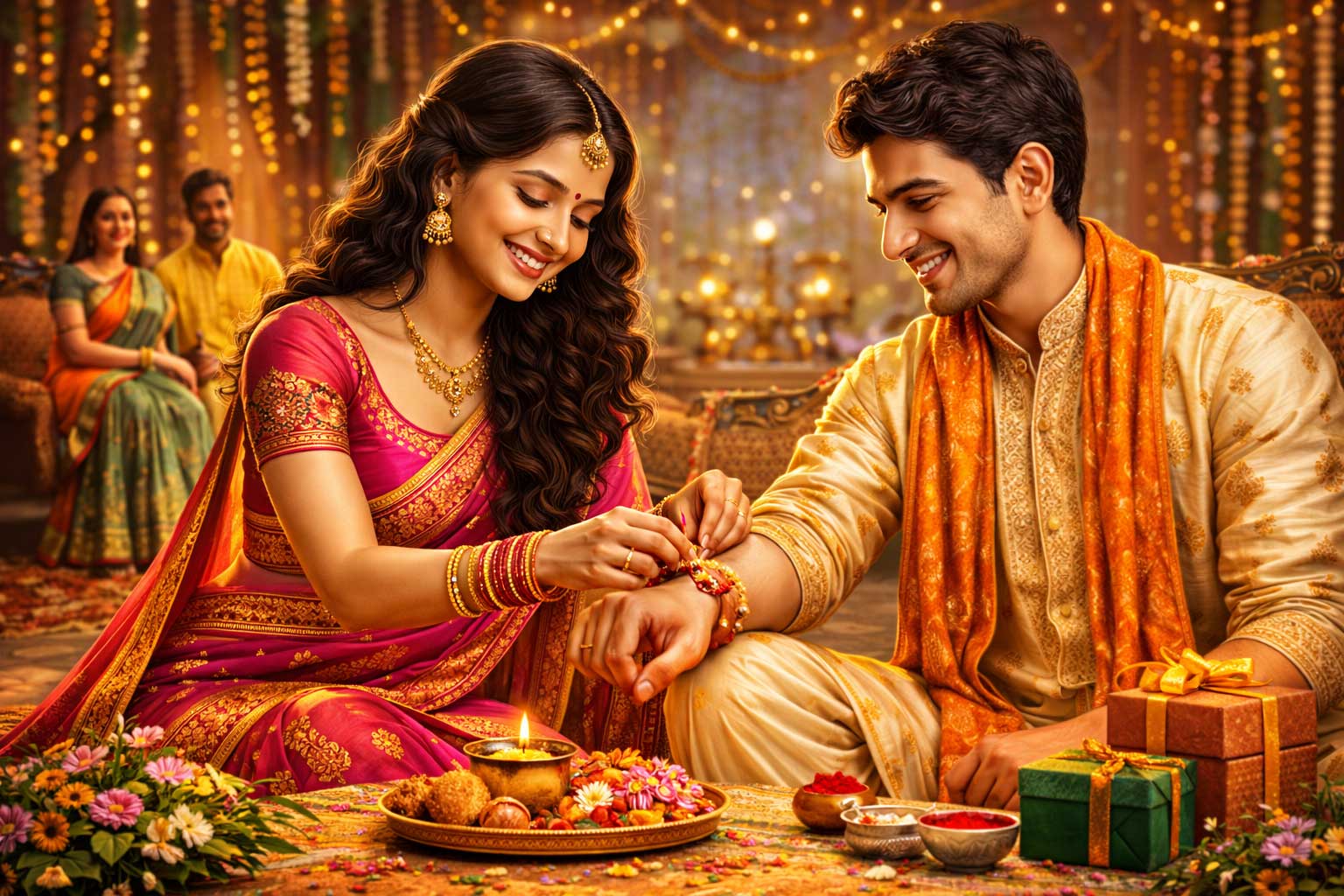
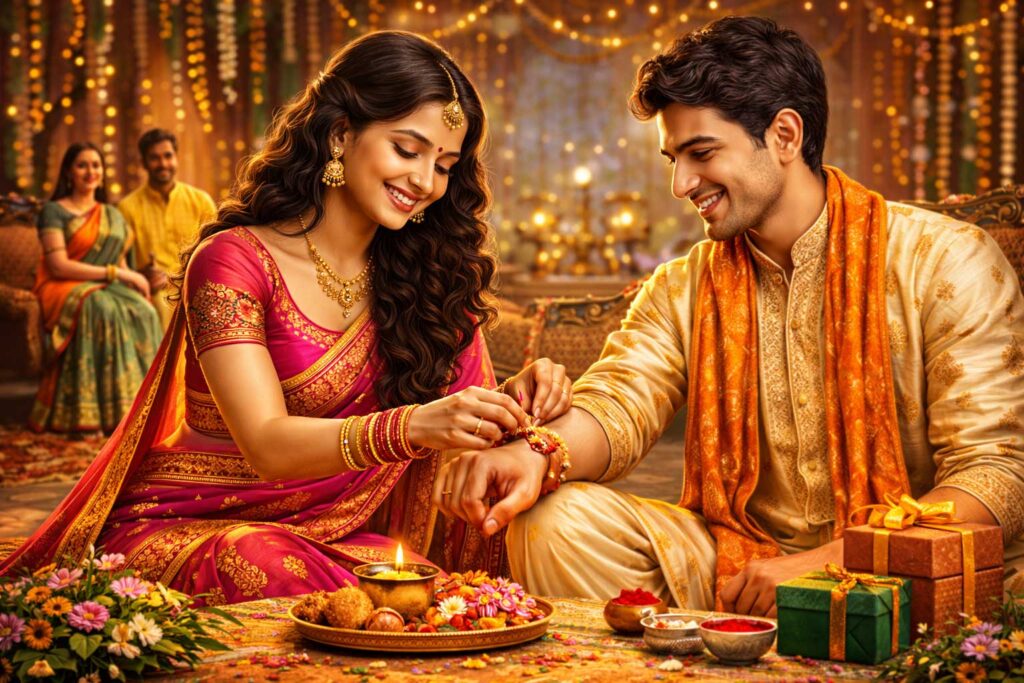
Raksha Bandhan, one of India’s most revered festivals, occurs on a full Moon in August. Raksha Bandhan celebrates the love and eternal protection of brothers and sisters for one another through the ritual of a sister tying an ornamental thread (rakhi) around a brother’s wrist, with the brother, in turn, committed to protecting her from the harshest of trials throughout her life.
In particular, the auspiciousness of Raksha Bandhan in 2026, which will be celebrated on August 28, will be even greater than usual, owing to the avoidance of Bhadra Kaal, an inauspicious period occurring before the moment of sunrise on that day.
Since the inauspiciousness is removed at sunrise, the morning hours before the rite will be much purer for this ceremony than they would otherwise be.
If you want to align your local celebrations with the sunrise times and lunar phase transitions in your area on August 28, 2026, consult our Monthly Panchang or check out Zodiac Predictions to see how the full moon affects family relationships.
Raksha Bandhan 2026: Shubh Muhurat & Tithi Timings
| Event | Timing / Tithi |
| Raksha Bandhan Date | August 28, 2026 (Friday) |
| Thread Ceremony Time | 05:57 AM to 09:48 AM |
| Purnima Tithi Begins | 09:08 AM on Aug 27, 2026 |
| Purnima Tithi Ends | 09:48 AM on Aug 28, 2026 |
| Bhadra Period | Ends before Sunrise on Aug 28 |
| Rahu Kaal (To Avoid) | 10:46 AM to 12:22 PM |
AstroZindagi Tip: For Raksha Bandhan 2026, sisters can place an item called Phitkari (alum) in their brothers’ pockets or wallets briefly before the ceremony, and once the ceremony is complete, throw the Phitkari into a corner of the garden. This simple remedy will help absorb negative “Nazar” (envy) directed at them, which may affect their progress.
Astrological Significance of Raksha Bandhan 2026
Puranas contain many stories about Raksha Bandhan, but the most notable is the legend of Goddess Lakshmi and King Bali. When she tied a cotton string around Bali’s wrist to protect Lord Vishnu, it showed that a Rakhi is not just a simple string but also the “Raksha Sutra,” symbolizing a thread of protection.
As this festival occurs during Shravan Purnima, a time of the Moon being in full form, it is particularly relevant from the standpoint of Vedic Astrology.
The great conjunction of planets on a Friday in the year 2026 (especially influenced by Venus (Shukra)) makes this day very favourable for family harmony, luxuries, and emotional closeness. More so, since the Purnima Tithi runs until 09:48 AM, the time of the Siddhi (or time of completion) for the Raksha Bandhan ritual falls in the morning during that timeframe. Also, considering that the Nakshatra has a positive impact relating to promoting longevity and strengthening familial ties during that period.
Further, tying the Rakhi on the right wrist will prevent the “Pitta” (Fire) element in the brother’s body from becoming excessive, thereby reducing fear and poor health, and further supporting the idea that the brother may fulfil his responsibility to protect his sister.
How to Celebrate Raksha Bandhan 2026 – Step-by-Step Instructions
The Raksha Bandhan ceremony holds a unique blend of spiritual, cultural, and deeply rooted ties. Because the Bhadra (a time before sunrise in 2026) is over and no longer a valid time for doing puja, you can begin preparations immediately upon sunrise.
Prepare The Puja Thali: Your own puja thali should contain these items: the traditional rakhi, akshat (unbroken rice), kumkum (vermilion), diya (ghee lamp) and sweets. Some families may also include a small piece of sandalwood or a coin (silver/gold) to further enhance their prosperity.
Tilak / Aarti: The brother should be sitting towards the East or North. The sister will first place the kumkum/akshat mixture on the brother’s forehead. The kumkum/akshat mixture is the opening of the “Third Eye” or intellect. The sister will also perform Aarti to protect her brother from the evil eye (Nazar) / bad vibrations.
Tying of Rakhi: When tying a rakhi to the right wrist, the sister must repeat or think of the following traditional raksha mantra: Yenna Baddho Bali Rajah Danavendro Maha-Bala, Yena Baddho Bali Raja Danavendro Mahabala, Tena Tvam Abhibadhnami Rakshe Ma Chala Ma Chala (Translation: I am tying you rakhi to protect you with the same thread as was tied to the great king Bali).
Exchange of Sweets/Gifts: As the rakhi thread is tied, the brother offers a gift to the sister, symbolising love and responsibility. Offering sweets enables both siblings to continue living sweetly and without bitterness towards one another.
Zodiac-Wise Remedies for Brothers & Sisters
On Raksha Bandhan in 2026, enhance the sibling relationship by using these simple “Fast Ways” based upon your Moon Sign, which can be used to gain additional protection and prosperity in your sibling bond.
Aries (Mesha): Sisters should choose a red-coloured Rakhi. Brothers will enhance their courage and Mars energy by donating red lentils (masoor dal).
Taurus (Vrishabha): Sisters should utilise a Rakhi in the colour white or silver. Sisters should offer their brothers white sweets, such as malai barfi, to foster peace and a sense of Venusian luxury in their relationship.
Gemini (Mithuna): Sisters should wear a green Rakhi. Brothers should provide their sisters with communication and electronic devices to strengthen Mercury’s influence in their relationship.
Cancer (Karka): Sisters should have a scarf made of silk or use a Rakhi with pearls attached to it. Prepare a glass of sweetened milk (known as bulbul) and present it to your brother to strengthen the emotional bond.
Leo (Simha): Choose a Rakhi in yellow or gold. Brothers will receive the blessing of the Sun for their family’s prestige by donating jaggery or wheat.
Virgo (Kanya): Use a Rakhi that is dark green or multiple colours. Giving your brother a small green plant will depict growth.
Libra (Tula): Select a Rakhi that has white stones or crystals. This ensures you maintain a perfect flow of energy and achieve harmony in your sibling relationship.
Scorpio (Vrishchika): Choose a Rakhi that is dark red or maroon. Brothers will need to refrain from eating spicy food on this day and be patient to pay tribute to the energy of Raksha.
Sagittarius (Dhanu): Use a Rakhi that is yellow or saffron. Sisters should apply turmeric tilak and kumkum to their brother’s forehead to promote their brother’s spiritual growth.
Capricorn (Makara): Use a Rakhi that is blue or dark. Brothers can mitigate the challenge associated with Saturn by donating black umbrellas or blankets to the needy on this day.
Aquarius (Kumbha): Use a unique or innovative design for your Rakhi. Providing dry fruits as Bhog for your brother will help him achieve success in innovation.
Pisces (Meena): Using a yellow silk thread as your Rakhi is best in this regard. Sisters should also pray to Lord Vishnu before tying the Rakhi on their brother’s wrist to ensure he lives a life of wisdom.
Frequently Asked Questions (FAQs)
If we cannot tie the Rakhi before 09:48 AM, what should we do?
Although the Purnima Tithi ends at 09:48 AM, Raksha Bandhan is still considered a festival; however, the day’s best energy is experienced during this morning window. If you miss the ceremony within that time frame, you can do it later at night; however, you still need to exercise caution to avoid performing it during the Rahu Kaal period from 10:46 AM to 12:22 PM.
Is there any issue with Bhadra for Raksha Bandhan in 2026?
Fortunately, in 2026, the Bhadra period will end before sunrise on August 28, meaning devotees will no longer face this major obstacle when performing the Rakhi ceremony.
Can I tie a Rakhi to someone who is not my biological brother?
Raksha Bandhan is meant to celebrate the concept of protection. Therefore, you can tie a Rakhi to your cousins, very close friends, or to any older person who has provided protection.
What is the meaning of the ‘Raksha Sutra’?
The Raksha Sutra is not just decoration; according to Vedic Astrology, it acts as a protective shield or ‘Kavach’ against the negative effects of Rahu and Ketu, thereby providing benefits to the holder of the sutra by augmenting their Prana (life force).