
Pitru Paksha 2026 Start
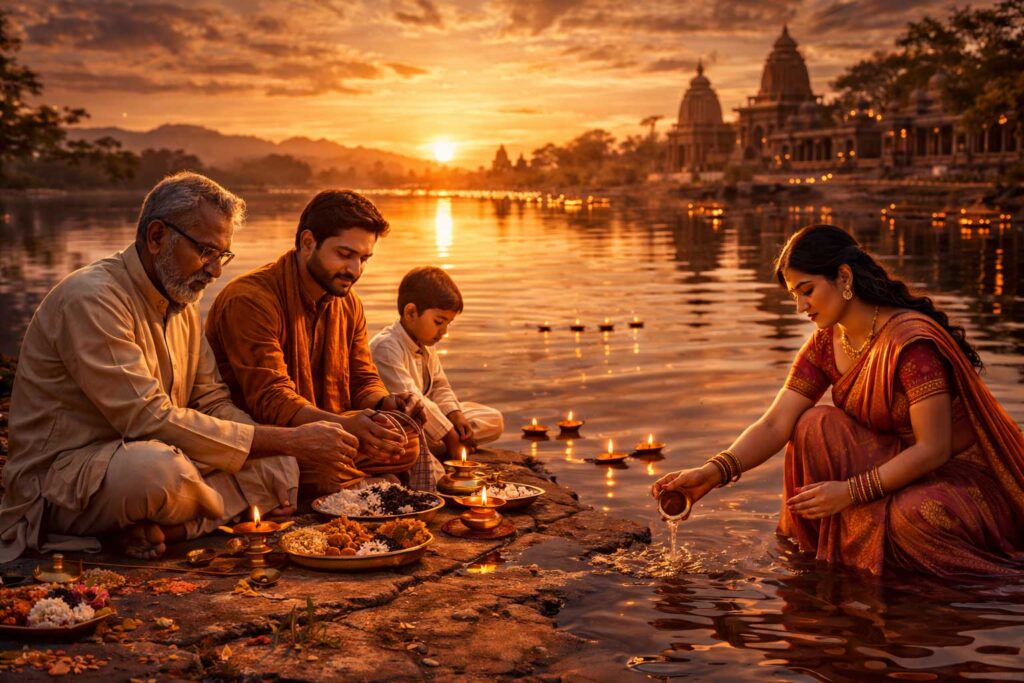
Pitru Paksha 2026 Start Date, End Date, and Full 16-Day Shradh Calendar
Pitru Paksha (the fortnight of the ancestors) is one of the most spiritually significant times in the Hindu calendar. In 2026, the first day to honour deceased ancestors is Pratipada Shraddha on Sunday, September 27.
The 16-day lunar period, called Bhadrapada, is dedicated to rituals of “Shraddha,” “Tarpan,” and “Daan,” which honour and provide for the departed ancestors (Pitrus).
According to Vedic astrology, this time of year opens a gateway between the physical world (Bhu-Loka) and the ancestral world (Pitru-Loka), allowing our ancestors to return to earth to visit their descendants and accept offerings.
Doing these rituals for the deceased ancestors creates lasting peace for them and provides the family with “Pitru Ashirwad” (blessings) from their ancestors.
To find the specific Tithi (date of the Fast), you may refer to our Monthly Panchang or view our Zodiac Predictions to see how these Tithi Influences impact your family and roots.
Pitru Paksha 2026: Shubh Muhurat & Tithi Timings
| Event | Timing / Tithi |
| Pratipada Shraddha Date | September 27, 2026 (Sunday) |
| Pratipada Tithi Begins | 10:18 PM on Sep 26, 2026 |
| Pratipada Tithi Ends | 08:58 PM on Sep 27, 2026 |
| Kutup (कुतुप) Muhurat | 11:48 AM to 12:36 PM |
| Rohina (रौहिण) Muhurat | 12:36 PM to 01:24 PM |
| Aparahna (अपराह्न) Kaal | 01:24 PM to 03:48 PM |
AstroZindagi Tip: If you feel stuck, no matter how hard you work, take a bowl of water mixed with black sesame seeds. Turn to the south at 1:30 PM (this is the Aparahna Kaal) and say, “I apologise for any mistakes my ancestors or I have made, please accept this water and bless me.”
After doing so, pour the water onto a plant. Using this remedy will help to wash away an enormous amount of pain in the universe as it acts as a strong karmic cleansing agent.
Astrological Significance of Pitru Paksha 2026
The significance of Pitru Paksha is discussed in the Puranas, wherein the Garuda Purana and the Matsya Purana provide extensive details. These texts assert that upon a person’s death, their soul will reside in Pitru-Loka.
After the date of death, family members will feel the presence of the departed in the form of “Vayu” (Air) or through various animals, such as crows. If family members of the departed ancestor fail to properly honour the ancestor, this can create “Pitru Dosha,” which may manifest by roadblocks to marriage, childbirth, or financial security.
From the Vedic Astrology perspective, Pitru Paksha is said to begin each year when the Sun enters Virgo (Kanya) or Libra (Tula). In 2026, the Positioning of the Planets will create a strong connection between the Sun and Mercury on Sept 27. This connection will allow for the most honest and accurate communication between the departed ancestors and the family performing “Pinda Daan” and “Tarpan” because of the connection between the Sun and Mercury.
The most ideal window to perform Shraddha is during the afternoon (Aparahna Kaal). When worshipping the Deities, this is performed during the morning, while the worship of the Pitrus is performed in the afternoon, as described by the Hindu Calendar.
Favourable Muhurats
Let us look at additional information on the auspicious Muhurats during Pitru Paksha by presenting several opportunities to conduct a Shraddha.
Kutup Muhurat (11:48 a.m. to 12:36 p.m.): The eighth Muhurat of the day is the most auspicious time to perform a Shraddha ceremony. Kutup means to destroy (or remove) sins and to remove (or destroy) the heat of suffering for those who have died, including your ancestors.
Rohina Muhurat (12:36 p.m. to 1:24 p.m.): The Rohina Muhurat follows the Kutup Muhurat and is created and influenced by the energy from the Rohini Nakshatra (Star) as a source of growth and peace for your ancestors who have passed on.
Aparahna Kaal (1:24 p.m. to 3:48 p.m.): The main time of beginning “Tarpan” (offering water) and “Pinda Daan” (offering balls of rice) to those who have died (including your ancestors) takes place during this time period. Most of the traditional Shraddha ceremonies will be conducted during these times.
Shraddha Vidhi – Step-by-Step Directions to Perform Shraddha
The Shraddha ceremony is a deeply personal and spiritual way for someone to show love and respect to their ancestors who died before them. To please the ancestors, a large ceremony is unnecessary; the ancestors will accept a sincere, honest offering made at home.
Purification & Preparation: Before the commencement of the auspicious rite, the performer of the Shraddha ceremony (usually the oldest son) should take a ritual bath and wear clean, white clothing. It is customary to wear a ring made of Kusha grass on the fourth (ring) finger of the right hand during the performance of Shraddha, as Kusha grass helps prepare the spaces for the transfer of spiritual energy.
Tarpan (Water Offering): In your hands, mix water, black sesame seeds (Til), raw milk, and barley (Jau). As you pour the mixed liquid out of your hands, you will do so towards the ground in front of you, through your fingers, facing South (the direction that your ancestors are located in), while saying the names of your ancestors (father, grandfather, great-grandfather and their wives).
Pinda Daan: Make up Pindas (balls of rice, black sesame seeds and honey) for each of your ancestors and make offerings of Pindas in front of the picture of your deceased ancestor (or ancestors), for them to consume, as nourishment for their souls on their way to the afterlife.
Panchbali (Five Offerings): Each family member should reserve one portion of his or her meal (usually Satvik prepared meal, such as Poori, Kheer, etc) for five offerings, before eating:
- Go-Bali: Cow (Symbolises Earth)
- Shwan-Bali: Dog (Symbolises the gateway to the afterlife)
- Kaka-Bali: Crow (The primary messenger of ancestors)
- Deva-Bali: Deities
- Pipilika-Bali: Ants/Insects
*The Pindas and 5 Bali’s shall all be offered in a shallow dish with enough water to allow the offerings to float on top, etc., for the walking dead.
Feeding a Brahmin (Brahmin Bhojan): After the Shraddha ceremony has been completed, it is customary to offer a virtuous Brahmin, or a person in need, food and to provide him or her with clothing and a charitable donation (Dakshina). After the Brahmin has eaten, the performer of the Shraddha may offer him or her food and clothing.
Pitru Paksha 2026: Remedies for Your Zodiac Sign (Rashi Upay)
Follow these specific Upayas on Pitru Paksha 2026 for your Moon Sign to alleviate your Pitra Dosh.
Aries (Mesha): To strengthen your Sun/Mars energies, and to bring peace to your forbearers and growth in your career, donate red lentils (Masaudi) and jaggery on a Sunday.
Taurus (Vrishabha): To balance your Venus energy and protect your forbearers over your financial stability, donate sweets made with dairy or sweets made with white sugar to a cow.
Gemini (Mithuna): To resolve communication issues among family members that date as far back as the past generations, donate green mungbeans to a cow and/or feed green grass to a cow.
Cancer (Karka): By mixing black sesame seeds with water and pouring it to the South, emotional stability will come, and your maternal lineage’s debts will be resolved.
Leo (Simha): By donating food and cooking utensils to the needy, you will improve your social prestige and have fewer obstacles in your professional life, since the Sun represents the Father.
Virgo (Kanya): By donating a book or writing supplies to an elementary school student while providing produce to a member of the family in need, you will strengthen your Mercury and gain intellectual peace.
Libra (Tula): By donating white silk or rice, you are creating an equilibrium between your duties as a spiritual being and your material existence.
Scorpio (Vrishchika): By pouring water and honey on the roots of a banyan tree, you are creating a healing process for family karma.
Sagittarius (Dhanu): By donating turmeric and yellow fruits to Gurus in your lineage, you are paying homage to the planet of the “Gurus”, because Jupiter rules your sign.
Capricorn (Makara): By donating black blankets or umbrellas to an elder, you will ease the harshness that is associated with the planet Saturn and provide stability in your long-term family objectives.
Aquarius (Kumbha): By donating coconut water and black sesame seeds into a flowing river, you will create an outlet of innovative success in relation to your current projects.
Pisces (Meena): By sitting in silence for a period of 20 minutes in a meditative state and donating yellow sweets, you will achieve mental clarity and peace, as well as the same for your forbearers.
Things to Do and Not to Do During Pitru Paksha 2026
Vedic Astrology outlines certain behaviours to adhere to to preserve the sacredness of this time.
Do Not Begin New Ventures: Do not make new purchases (homes, vehicles, or create new businesses) during Pitru Paksha because this time is for remembrance rather than progress.
Do Not Have Shubh Karya: Marriages, Mundan (head shaving), and Griha Pravesh (home blessing) ceremonies may not be held during Pitru Paksha.
Follow A Tamasic Diet: Tamasic means non-vegetarian foods, drinking, and eating onions or garlic must not occur during Pitru Paksha.
Show Respect to Animals: You should not chase any dogs, crows or cows away from your home during Pitru Paksha.
Be Celibate: During the 16 days of Pitru Paksha, one should practice Brahmacharya.
Frequently Asked Questions (FAQs)
Who should perform Shraddha?
Tradition dictates that the eldest son will carry out the Shraddha. However, if he isn’t present, his younger brothers, grandchildren, or wife/daughter may take part in it with equal reverence, devotion and commitment.
Where can I perform Shraddha?
You may conduct your Shraddha at home. However, there are also great benefits to performing it at a “Teerth Kshetra” (holy site), such as Gaya, Varanasi, or Prayag (Allahabad), in helping an ancestor attain Moksha (liberation from the cycle of birth and death).
What if I do not have the anniversary of my ancestor’s death?
If you don’t know your ancestor’s Tithi (date of death), then you can perform their Shraddha on the Sarvapitri Amavasya (the last day of Pitru Paksha), which is the day set aside for all ancestors collectively, whether you know them or not.
How do crows figure into Pitru Paksha?
Crows are believed to serve as a bridge between the physical and spirit worlds. Additionally, when a crow eats the offerings made to it (called Kaka Bali), it is said that they deliver the food to your ancestor(s).
Should I cut my hair or nails, or shave during Pitru Paksha?
Hardcore traditionalists refrain from cutting hair, nails and/or shaving for the entire time period of sixteen days as it represents mourning for the deceased.