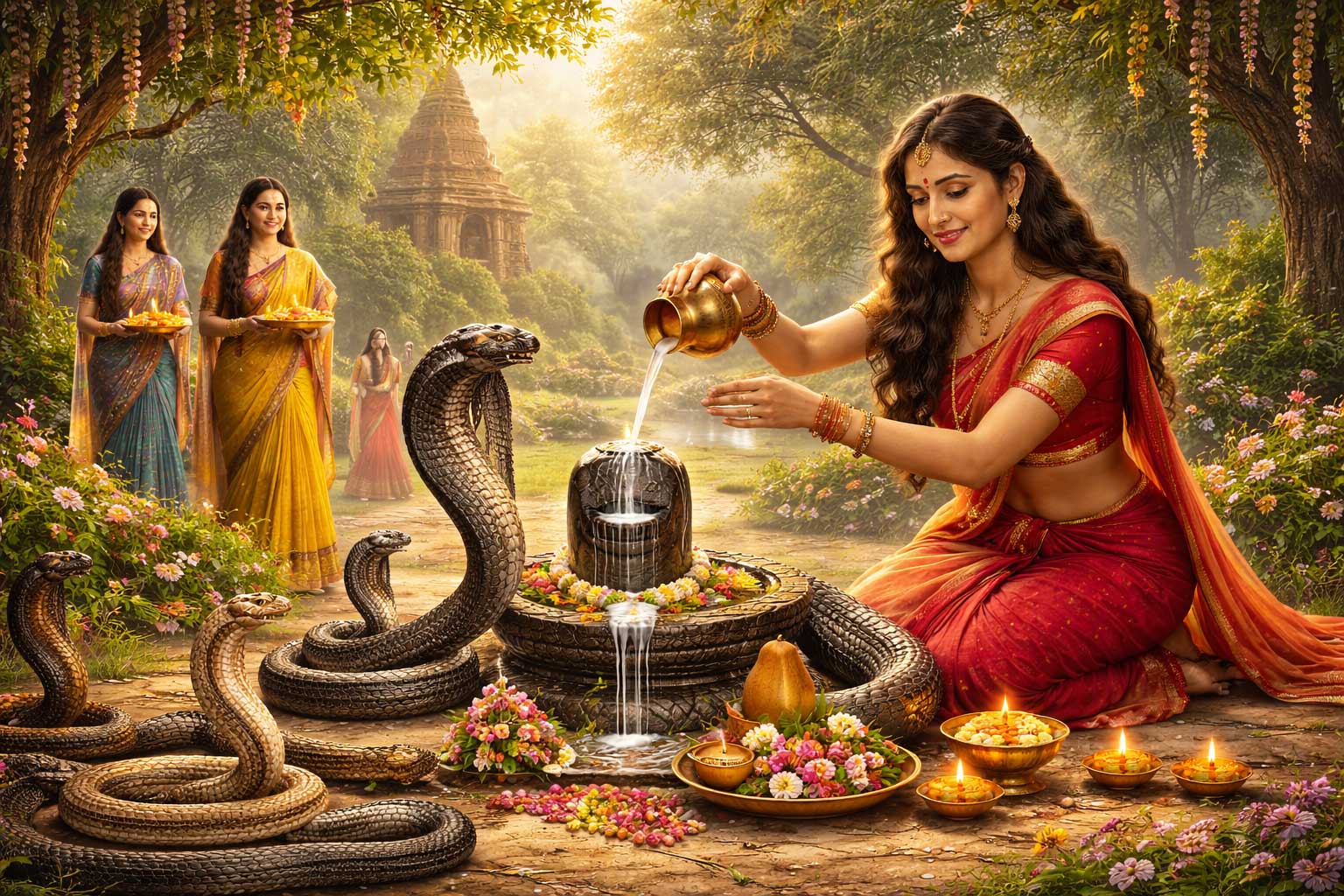
Nag Panchami 2026
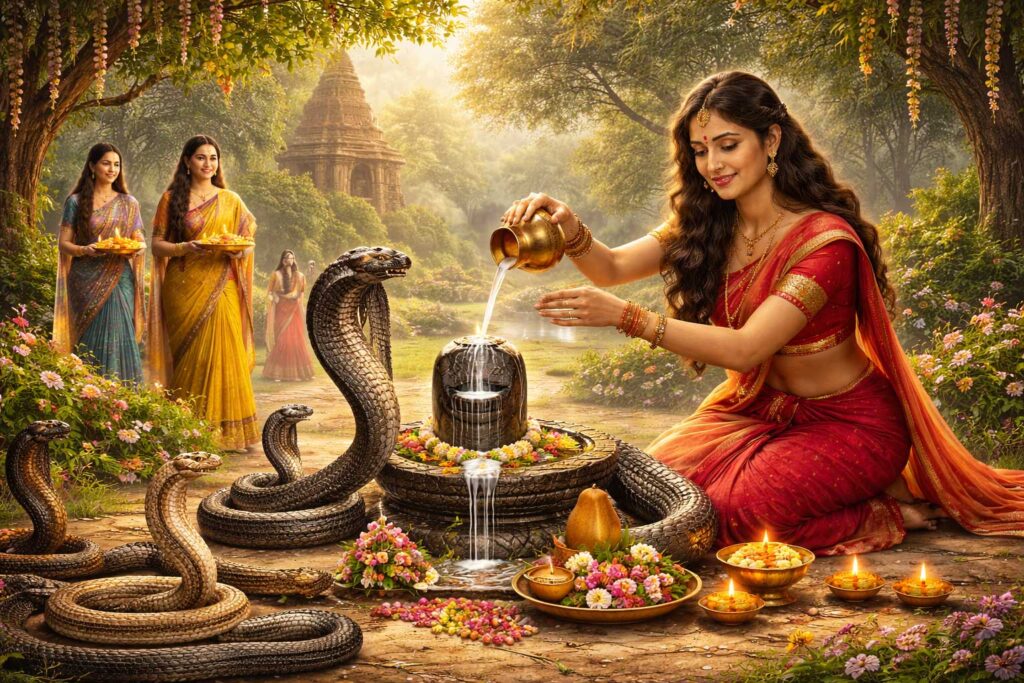
Nag Panchami 2026: Date, Shubh Muhurat, Puja Vidhi, and Significance
Nag Panchami, the day for worshipping Naga (serpent) gods in Hindu culture, is celebrated on the fifth day after the full Moon of the month of Shravana every year. In 2026, this festival will be celebrated on August 17, 2026.
This year is significant as it falls in the month when Nagas are revered for their power and are represented in Hindu scriptures as guardians of the Patala Loka (the underbelly of the earth), where treasures and, most of all, hidden knowledge are said to reside.
The energies present on Nag Panchami offer tremendous potential for spiritual growth for those seeking to overcome the influence of hidden enemies or to free themselves from “Kaal Sarp Dosha.”
Because Nag Panchami 2026 falls on a Monday, the day of Lord Shiva, who wears the serpent Vasuki around His neck as an ornament, it adds to the day’s already significant spiritual vibrational energies.
You can find out when the sunrise and sunset of Nag Panchami will be according to your local time zone by viewing our Monthly Panchang.
Nag Panchami 2026: Shubh Muhurat & Tithi Timings
| Event | Timing / Tithi |
| Nag Panchami Date | August 17, 2026 (Monday) |
| Nag Panchami Puja Muhurat | 05:51 AM to 08:29 AM |
| Panchami Tithi Begins | 04:52 PM on Aug 16, 2026 |
| Panchami Tithi Ends | 05:00 PM on Aug 17, 2026 |
| Nag Panchami in Gujarat | September 1, 2026 |
| Rahu Kaal (To Avoid) | 07:35 AM to 09:12 AM |
AstroZindagi Tip: If you were born with a “Kaal Sarp Dosha” or have had bad luck, use this simple remedy on Nag Panchami 2026: Take a small piece of coal and whirl it around your head 7 times in a clockwise direction; then put it into a flowing body of water (preferably a river), or place it under the Peepal tree for it to absorb the “poison” from all of your hurdles.
Nag Panchami 2026: Shubh Muhurat and Tithi Timings
The celebration of Nag Panchami is based on the Puranic tradition, particularly that of the “Samudra Manthan” (or “The Churning of the Ocean”). During the churning of the ocean of milk, the great serpent Vasuki provided the rope to churn the ocean.
To save the world from destruction by the Halahala poison after the churning of the ocean, Lord Shiva drank all of the poison. The serpents helped by absorbing the stray drops. The festival acknowledges the divine beings who helped him.
From a Vedic Astrology perspective, Nag Panchami is the most auspicious day to perform remedies for Rahu and Ketu, the two shadow planets that represent the head and tail of a serpent.
The planetary alignment on August 17, 2026, shows a strong influence from both the Moon and Saturn. The worship of Nag Devata is instrumental in neutralising the “Sarpa Shrap” (Curse of the Serpent) and reducing the effects of Rahu’s intense transit.
The Nakshatra in this period will provide an opportunity to master your fear and transform your “poison” into “nectar.” For people with a “Kaal Sarp Dosha” (all planets positioned between Rahu and Ketu) in their birth charts, this auspicious day will allow the native to obtain relief and peace of mind.
Why is Nag Panchami Celebrated Differently in Gujarat?
One of the major questions that arises among devotees who participate in Nag Panchami festivities is the difference between Gujarat’s observances and those in the rest of India.
In 2026, the majority of Indian states will observe Nag Panchami on August 17, while in Gujarat, the date of celebration will take place on Tuesday, September 1. The reason for the difference stems from a difference between the Amanta and Purnimanta calendars.
North Indian calendars are based on the Purnimanta principle, whereby a new month begins at the moment of the full moon. In contrast, Gujarati and other southern Indian calendars follow the Amanta principle, whereby a new month begins at the moment of the new moon.
While there is a difference in the methodology of measurement, the actual spiritual significance and meaning of Nag Panchami remains the same: the twelve main Nagas will be honoured on this day. The twelve main Nagas are: Ananta, Vasuki, Shesha, Padmanabh, Kambal, Shankhapal, Dhritarastra, Takshak, Kaliya, Pushpak, Pingal and Sankh.
How to Celebrate Nag Panchami 2026: Step-by-Step Instructions
Worshipping snakes is a custom that is based upon great purity and respect, so it is an old custom not to till the land or work the fields on this holiest of days. By tithing the earth, it is easy to inadvertently kill a snake.
Purification (Snana): Wake up before the sun and take a ceremonial bath; many devotees will also wear white or silver on this Shravan Monday. Clean the puja altar and prepare a small (Chauki) table to hold your puja items.
Idol Placement (Sthapana): In this step, the ceremonial place will receive five serpents, either as images or idols (of silver, clay, or stone). If there is no idol of a snake, five serpents can be represented by drawing them upon a wall using a mixture of cow dung and sandalwood; there should be an image of Lord Shiva alongside the five serpents, as Lord Shiva is the Lord of the Snakes.
Substantiation (Abhishek) and Offerings: The offering of milk to the snake idol is the main puja. The snake idol should be bathed in raw milk mixed with honey and water. Additional offerings may include “Akshat” (a form of rice), flowers, and incense; traditionally, the snake idol is also offered (as a snack or food), along with “Lava” (puffed rice) and a glass of milk.
Chant Mantras: Sit in a meditative posture and chant the following mantra to invoke the protection from all earthly serpents and to provide protection from harmful planetary influences: Sarve Naga: Priyantam Me Ye Kechit Prithvi Tale, Ye Cha Helimarikistham Ye Chaantarakashe Sansthitam (Translation: May all the snakes that exist on this earth, above the earth and from the sun please be at peace with me.)
Nag Panchami 2026: Remedies for Your Zodiac Sign (Rashi Upay)
Perform these specific “Upays” on Nag Panchami 2026 to align your Moon Sign with the serpent energy.
Aries (Mesha): Offer red flowers and milk to a Shiva Lingam. This will help you manage impulsive decisions and protect you from sudden financial losses.
Taurus (Vrishabha): Donate white clothes to a priest and offer silver-colored Naga idols in a temple. This remedy enhances your luxury and stabilises your career.
Gemini (Mithuna): Offer green moong dal and sugarcane juice to the Nag Devta. This helps sharpen your communication and clear misunderstandings in your family.
Cancer (Karka): Performing the milk Abhishek on this Monday is vital for you. It helps in soothing your emotional turbulence and brings peace to your mother’s health.
Leo (Simha): Offer water mixed with red sandalwood and jaggery. This boosts your prestige and helps you overcome competitors in your professional life.
Virgo (Kanya): Donate books or stationery to the poor and offer green fruits to the Naga idol. This remedy improves your analytical skills and helps in educational success.
Libra (Tula): Offer white sandalwood and perfumed oil (Ittar). This attracts harmony in your relationships and balances your material desires.
Scorpio (Vrishchika): Offer a mix of milk and honey. As Scorpio is naturally associated with the occult and transformation, this remedy grants you deep intuitive powers.
Sagittarius (Dhanu): Donate turmeric and yellow sweets. This strengthens your connection with your Guru and brings spiritual growth.
Capricorn (Makara): Offer black sesame seeds and milk. This helps mitigate Saturn’s harshness and provides stability for your long-term goals.
Aquarius (Kumbha): Offer coconut water and blue flowers. This remedy helps in bringing innovative ideas to life and ensures social recognition.
Pisces (Meena): Offer saffron-infused milk and meditate for 15 minutes. This helps in attaining mental peace and spiritual clarity.
Exploring the Mystery of Kaal Sarp Dosha
The Kaal Sarp Dosha is the basis of Nag Panchami’s significance in Vedic astrology. Kaal Sarp Yoga occurs when the 7 planets are located indirectly between Rahu and Ketu. This yoga generally produces two major results during one’s lifetime: struggle followed by success, and failure followed by success.
- Anant Kaal Sarp: Affects the way a person performs.
- Kulik Kaal Sarp: Affects the way wealth is received and spoken about.
- Vasuki Kaal Sarp: Affects siblings, as well as a person’s level of courage.
- Shankhpal Kaal Sarp: Affects domestic peace and the way in which someone relates to their mother.
- Pada Kaal Sarp: Affects the way a person deals with their children and education.
- Takshak Kaal Sarp: Affects the way that a person relates to their spouse, in terms of marriage and partnership.
Nag Panchami is the only day when a simple prayer can help mitigate the negative effects of the Kaal Sarp Dosha. By performing prayers for the Nagas, one honours the cosmic limits set by Rahu and Ketu.
Frequently Asked Questions (FAQs)
Can the Nag Panchami puja be done at home?
Yes, the puja can easily be performed at home by drawing a snake on your wall or using a silver snake idol. You will need to offer milk to the snake for the family’s welfare.
What type of foods are eaten for Nag Panchami fasting?
Usually, devotees remain fasted throughout the whole day. After the puja, a “Sitkik” meal is eaten, usually consisting of sweets, fruits, and milk. Devotees should generally refrain from fried foods or salt.
What is Nag Panchami? What’s the difference between Masik Nag Panchami and Nag Panchami?
Masik Nag Panchaji is observed on a panchami tithi (day) every month during the shukla paksha (light half of the lunar calendar). Still, the Nag Panchami celebrated during the month of Shravan is most significant and is observed as a major festival in many parts of India.
Can you fry on Nag Panchami?
Many North Indian households refrain from using an iron tawa (griddle) or frying food in oil on this day, as they believe it to be a representation of the heating of the serpent’s bed. The preferred method would be to eat boiled or steamed foods.
Why do we offer milk to snakes?
Although snakes do not biologically drink milk, they are symbolically given milk. Milk is considered an illustration of purity and amrit. Thus, by offering milk to the nagas (serpent gods), those who offer receive a request to be protected against all of life’s struggles (poisons).