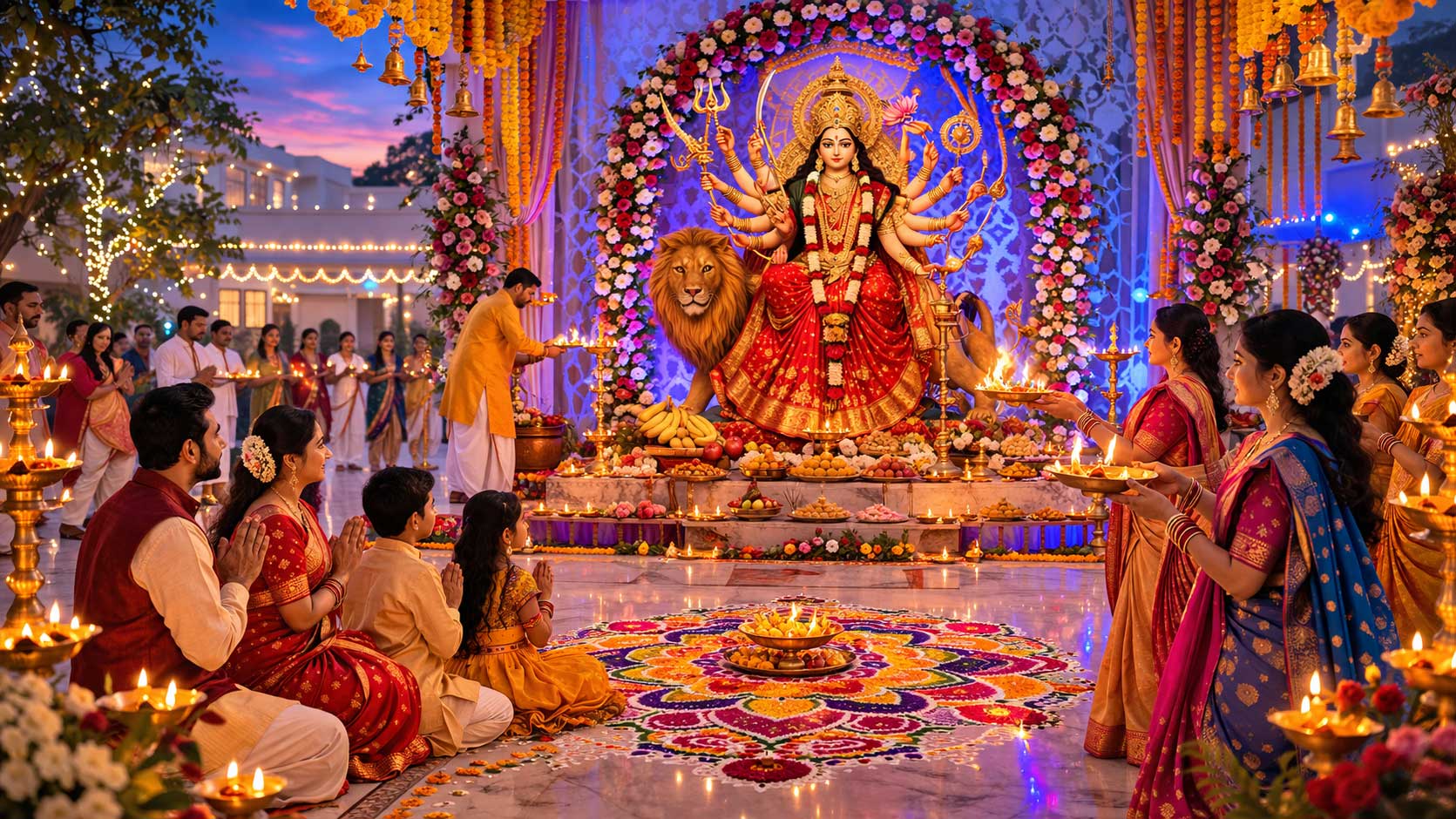
Maha Navami 2026
Maha Navami 2026 on October 19 or 20: Date, Shubh Muhurat, Navami Homa Timings & Zodiac Remedies
In 2026, the last day of the Navratri festival, Maha Navami, will fall on a Monday, October 19. On this day, worshippers will honour Maa Siddhidhatri, the ninth and last form of the goddess Durga.
“Siddhi” means perfection or the ability to meditate, while “Dhatri” refers to one who gives. Therefore, on this day, devotees of the mother goddess will receive both spiritual and material perfections.
In 2026, there will be an exceptional astronomical occurrence of Durga Ashtami and Maha Navami (also occurring on the same solar day, Monday). Because of this, the energy generated during these two days and 24-hour cycles will create an extraordinary degree of intensity in this lunar phase.
According to the Panchang, the Tithi of Navami will “begin” just before noon on the 19th but continue to be celebrated on the 20th. To calculate the correct time for your Havan and Kanya pujan ceremonies, check our Panchang and look up the Zodiac Predictions for how the conclusion of this year’s Navratri may influence your horoscope.
The 2026 Maha Navami Muhurat Box
| Event | Timing / Tithi |
| Maha Navami Date | October 19, 2026 (Monday) |
| Navami Tithi Begins | 10:51 AM on Oct 19, 2026 |
| Navami Tithi Ends | 12:50 PM on Oct 20, 2026 |
| Navami Havan Muhurat | 11:44 AM to 12:30 PM (Abhijit) |
| Navratri Parana (Fast Break) | After 12:50 PM on Oct 20, 2026 |
AstroZindagi Tip: After the Havan Kund has cooled down, on Maha Navami 2026, take some ash (from the fire) and wrap it in a piece of yellow cloth. Once you have this ready, find a good place in your study or workspace to keep the wrapped ash. This simple remedy is a form of “Siddhi-Yantra.” By doing so, you are empowered to remain focused and successful on your path through the coming year.
Astrological Significance of Maha Navami 2026
Maha Navami is the last day of the war between Goddess Durga and the demon Mahishasura. In the Puranas, it was said that on the morning of the ninth day, the Goddess successfully killed the entire demon army and won the final battle, a victory celebrated as Dashami or Dussehra. On a spiritual level, the ninth day represents “Siddhi,” or the ultimate state of realisation of the Self.
The ninth Tithi in Vedic Astrology is ruled by Mars, the planet of action (Mangal). However, this Navami happens to coincide with the Moon’s day, thus creating a “Chandra-Mangala” of energy for the day.
This unique combination of the forceful energy of Mars and the intuitive energy of the Moon, occurring on Maha Navami 2026, makes it the ideal time for people to seek emotional stability and professional success.
For those who have completed their 9-day Sadhana, this will be an important day for those seeking “Siddhi Prapti,” or the effective manifestation of their prayers.
How to perform Maha Navami Havan
Havan (also known as a Sacred Fire Ceremony, or simply “Fire ceremony”) is one of the most important rituals on Maha Navami because it is said to purify the atmosphere through the smoke it produces. In addition, the smoke carries our offerings up to the heavenly spheres where the Devta will accept them.
Preparation of the Havan: You must prepare and clean your Path/ altar and then build a Havan-Kund in which you can perform the Havan. To do this, you must use wood taken from a Mango tree (if you are not able to find mango wood, there are many other acceptable types of wood), camphor, and ‘Havan-Samagri’ (a combination of herbs). As you put the Ghee and Havan-Samagri into the fire, you are to chant the Devi Mahatmya and/or the verses of the Durga Saptashati.
Purnahuti: At the end of the Havan, you must do the ‘Purnahuti” (the final offering), which involves offering a Dry Coconut filled with Ghee and wrapped in a red cloth to the fire (this is representative of giving up your ego completely to the Divine Mother). In the year 2026, you should perform this during the period of Abhijit Muhurat (11:44 am – 12:30 pm) to gain maximum spiritual benefit from the Havan.
How to Celebrate Maha Navami 2026 Puja – Step-by-Step Instructions
Although Kanya Pujan is generally performed on Ashtami, Navami is considered the most auspicious day when following the Mahanavami tradition.
Puja to Maa Siddhidhatri (Spiritual Invocation of the Goddess): It is believed that she is depicted sitting on a Lotus and holds a discus, mace, conch shell, and lotus. Offer either purple or pink flowers and give her a Bhog of Halwa, Poori and Chana.
Kanya Pujan: Nine young girls will represent the Nav Durgas, and according to my belief, they are Sattya – true) Pure); Rita (Justice); Yasha (Reputation); Vachana (Words); Artha (Wealth); Kaam (Desire); Dharma (Piety); Jagannath (Creation); as well as Akhila – all-encompassing. You must wash their feet and give them a tilak (identified with your “Third”, eternal consciousness), and feed them a festive meal. The Navami celebration begins in 2026 at 10:51 am, so you could do Kanya Pujan any time in the afternoon or early evening, if desired.
Suhasini Puja: In line with many belief systems, married women (referred to as “Suhasinis”) are also recognised on Navami. You should offer items designated as “Shringar”, such as Maang Tika, Bangles, and a Mirror, to commemorate the feminine life source of creative energy.
Maha Navami 2026: Remedies for Your Zodiac Sign (Rashi Upay)
To complete your Navratri journey, do the following last remedies on Maha Navami 2026 according to your Moon Signs.
Aries (Mesha): Offer red fruits along with a small copper coin to the Goddess. This will help you focus on growing financially through your career.
Taurus (Vrishabha): Donate white clothes or rice to an underprivileged girl to enhance your Venus (Taurus) energy so you can feel secure in your finances.
Gemini (Mithuna): Offer green cardamom (Elaichi) and sugar candy (Mishri) into the Havan to remove blocks in your personal life.
Cancer (Karka): Perform the last Aarti with a lamp that has either camphor or whole cloves for you to obtain emotional peace and also protect your physical health.
Leo (Simha): Offer a red silk flag to any temple to enhance your leadership and increase your social standing.
Virgo (Kanya): Donate green vegetables or stationery items to help you align with your Mercury energy and to remove blocks with your analytical abilities.
Libra (Tula): Offer white flowers and scented oil (Ittar) to attract peace and balance in your relationships, and also help you balance what material things you want and what you need.
Scorpio (Vrishchika): Offer either jaggery or saffron-infused water to help transform your fears into intuitive strength.
Sagittarius (Dhanu): Donate yellow fruits and turmeric to honour the great wisdom the Mother Goddess possesses, as Jupiter rules Sagittarius.
Capricorn (Makara): Light a mustard oil lamp in the north-east corner of your home to lessen the effect of Saturn on your life and create stability in your career.
Aquarius (Kumbha): Offer coconut water or blue flowers to create social recognition for you and to assist you with your humanitarian efforts.
Pisces (Meena): Meditate silently for 20 minutes. Additionally, offering honey and yellow flowers will provide you with ultimate fulfilment of mind and spirit.
Frequently Asked Questions (FAQs)
How do I know when to break my Navratri fast in 2026?
Traditionally, you should break your fast at the end of the Navami Tithi, which in 2026 will fall on Tuesday, October 20, at 12:50 PM. The best time to complete your fast will be after that time to properly perform the ritual.
What does Maa Siddhidhatri symbolise?
She is the goddess who has all eight Siddhis (Anima, Mahima, Garima, Ladhima, Prapti, Prakaamya, Ishtva, and Vashtva). The worship of her during the festival of Navami is to ask for the final perfection of one’s soul.
When is it best to perform Havan at night?
While most will perform Havan during the Abhijit Muhurat (afternoon), many who follow Tantric traditions or a deep meditative practice will perform Havan during the Nishita Kaal (midnight), while those of us leading a household will find that the best time is during the day.
Why is it called Maha Navami?
Maha Navami, or “Great” Navami, symbolises the total manifestation of the universe and the connection between the nine days of penance and the ultimate victory of Dusshera.