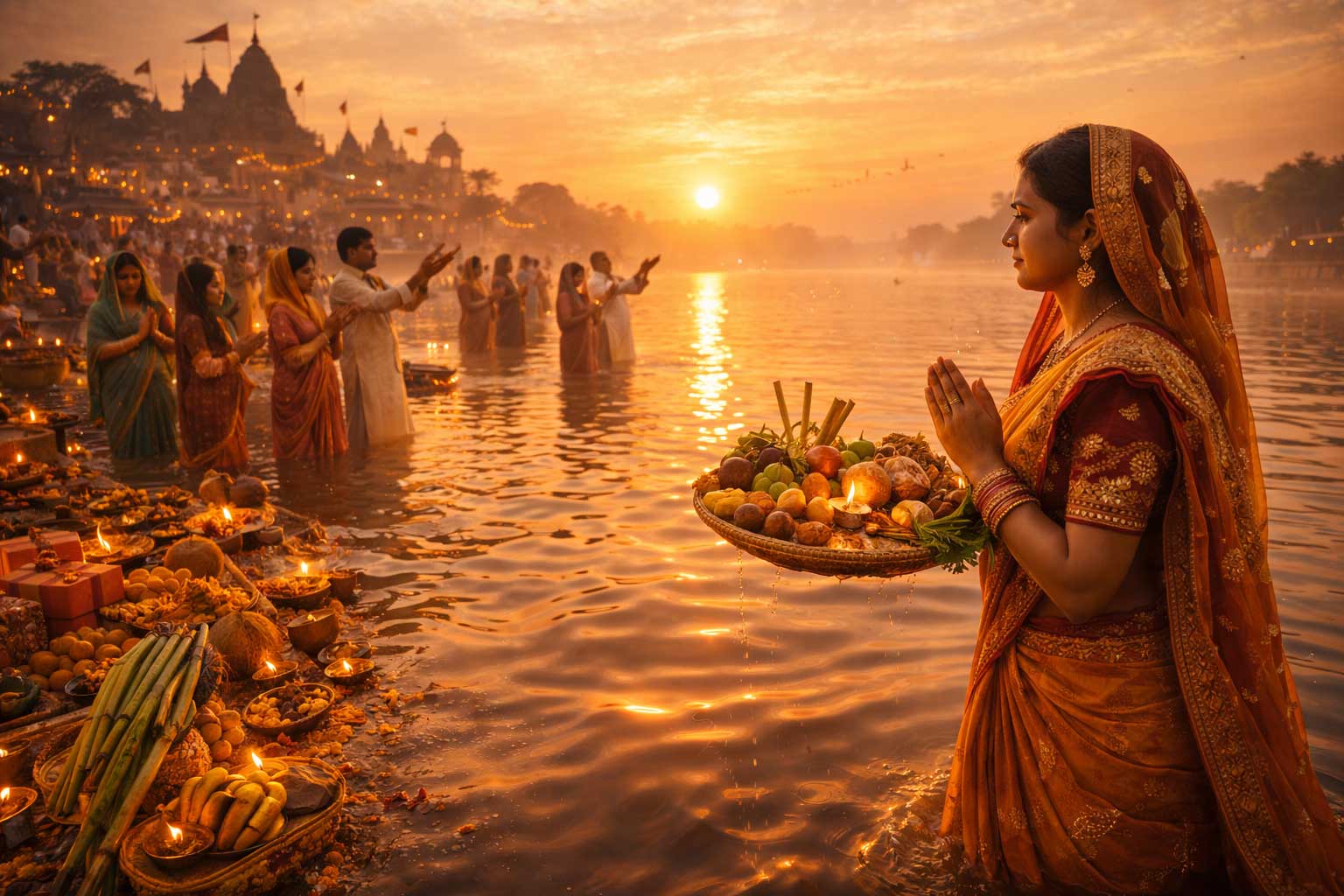
Chhath Puja 2026
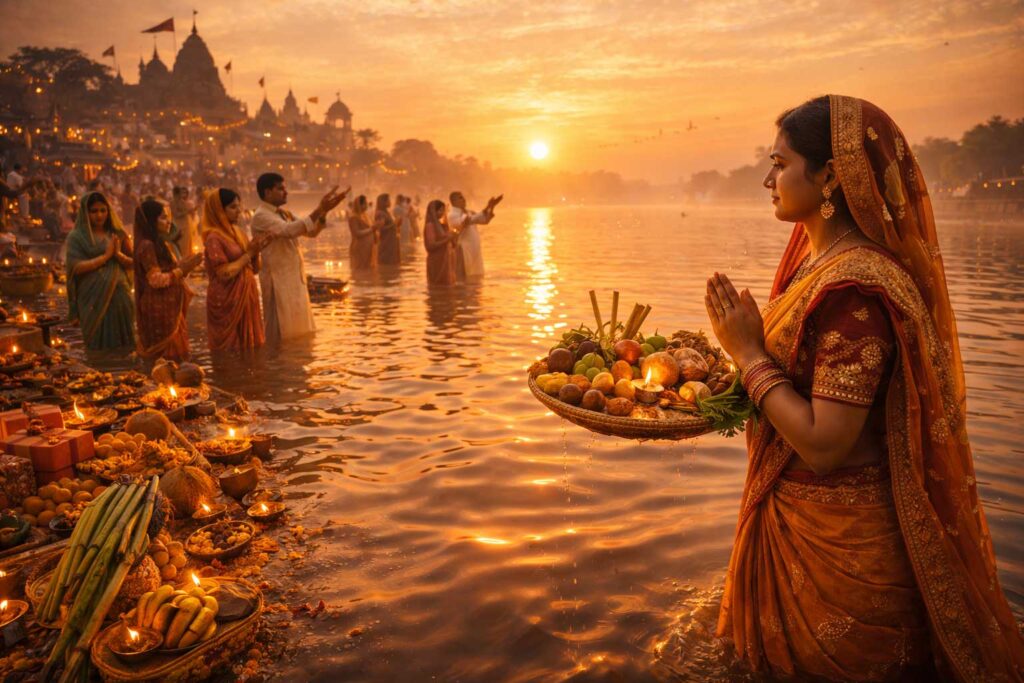
Chhath Puja 2026: Dates, Nahay-Khay, Kharna, and Arghya Timings
Chhath Puja is one of the most important festivals celebrated in the Vedic calendar. It marks the four-day period dedicated to worshipping Surya Dev (the Sun God) and Chhath Maiya (the sister of Surya).
Unlike other Hindu festivals, Chhath is not performed with idols; instead, it is a Nirankar (formless) puja conducted along the banks of rivers or other bodies of water. It is performed in honour of the life-giving energy that the Sun provides.
In 2026, Chhath Puja will take place at an incredible time due to the alignment of celestial bodies.
2026 will be a particularly powerful year because most people will observe Chhath Puja on Sunday, the day ruled by the Sun. Therefore, the powerful energy generated by worshipping the Sun will greatly enhance the atma-bal (soul force) produced in all prayers directed towards the Sun god.
To ensure that you will observe the fasting and the holy dips according to the solar transitions of 2026, reference our Panchang; you can see how the Surya shakti will affect your health and children by using the Zodiac Predictions.
Chhath Puja 2026: Shubh Muhurat & Tithi Timings
| Event | Date | Timing |
| Day 1: Nahay Khay | Nov 13, 2026 (Friday) | Sunrise: 06:42 AM |
| Day 2: Lohanda & Kharna | Nov 14, 2026 (Saturday) | Moonrise: 10:20 AM |
| Day 3: Sandhya Arghya | Nov 15, 2026 (Sunday) | Sunset: 05:28 PM |
| Day 4: Usha Arghya | Nov 16, 2026 (Monday) | Sunrise: 06:44 AM |
| Shashthi Tithi Begins | Nov 14, 2026 | 11:23 PM |
| Shashthi Tithi Ends | Nov 16, 2026 | 02:00 AM |
Astro Zindagi Tip: On 15th November 2026, take a small piece of raw turmeric and wrap it in a red cloth. At 05:28 PM during the Sandhya Arghya, hold the turmeric in your hand while facing the Sun. After the Puja, place it in your child’s bedroom/study area. This simple astrological remedy acts as a Surya Kavach, protecting children from negative influences from peers and helping them concentrate on their studies.
Astrological Significance of Chhath Puja 2026
Chhath Puja has immense relevance in both the Vedic traditions, the Rigveda, and the Mahabharata. It is believed that Karna, the son of Surya (the Sun God) and a King from the region which includes present-day Bihar, performed this puja while standing in water. Draupadi and the Pandavas also performed this puja to regain their kingdom after losing it through a game of chance. Chhath represents the spiritual reception of solar energy directly into the body for healing and long life.
According to Vedic Astrology, the Sun (Surya) is in the Libra sign during this time of year. In 2026, a planetary alignment will place Surya in a powerful position of transformation.
Worshipping the setting Sun (during Sandhya Arghya) is exclusive to Chhath. The setting Sun shows that life is a continuous cycle; therefore, every Sunset is a prerequisite to the following Sunrise. Though both ends and beginnings in cycles are important moments in life’s cycles, we often do not honour the end moments as much as we do the beginning.
Karthikeya and Shashthi Devi govern the 6th tithi. Therefore, when Vratis (fasting participants) worship the Sun during this tithi, they will be blessed with good progeny, clear thinking, and immunity to skin diseases.
The Four Days of Chhath (The “How-To”)
We must take note of the methodical nature of each of the four days.
Day 1: Nahay-Khay (November 13, 2026)
The first through fourth days of this festival are all about spiritual cleansing. The Vrati takes a dip in the Ganges (Holy River) and prepares Lauki-Bhaat (bottle gourd with rice) in a copper or earthen vessel over a fire made out of mango wood. Both the gourd and rice, in Vedic Astrological terms, represent the moon and the planet Mercury, which help a person quiet his/her mind before the 36-hour gruelling fast.
Day 2: Lohanda & Kharna (November 14, 2026)
The second day of the festival involves the vrati observing a full day of fasting and eating their first meal only after sunset. The meal consists of kheer (a type of rice pudding made with jaggery) and unleavened flatbreads. After the 36-hour fast (no water is consumed), the person will be sustained by the jaggery from his/her meal, providing the body with the necessary “Mars” energy to endure the penance to come.
Day 3: Sandhya Arghya (November 15, 2026)
On the third day of the Chhath Festival, devotees will prepare a special dessert called Thekua (a type of whole-wheat biscuit/doughnut) and a soop (a bamboo basket) filled with various seasonal fruits, such as coconut, sugar cane, and banana. At 5:28 PM on this day, thousands gather along the banks of the river to perform the Arghya (prayers) to the setting Sun while standing waist high in water as a way of thanking the Sun for sustaining life on earth.
Day 4: Usha Arghya (November 16, 2026)
The final day of the celebration is when devotees wait for the first rays of the Sun to rise. When the Rising Sun makes its first appearance at 6:44 AM, the vrati will perform Arghya (worship) to the Rising Deity, thus completing his/her fast. The fast is considered complete when the vrati eats Prasad (blessed food) and ginger water at the end of this day.
The Science of Solar Healing: Chhath & Health
Vedic Astrology and Old Physiology State that standing in water while facing towards the Sun can aid in:
Vitamin D Absorption: The rays coming down from the Sun in the morning and the evening are the best for your body and will also provide the most benefit.
Solar Plexus Activation: The solar plexus, also known as the “Manipura Chakra,” is associated with the Sun and Chhath rituals. The Chhath ritual is intended to create balance with the solar plexus’s energy, leading to improved confidence and digestion.
Mental Clarity: The Sun reflecting off the water helps create a form of “Trataka,” improving mental clarity.
Chhath Puja 2026: Remedies for Your Zodiac Sign (Rashi Upay)
If you can’t fast for Chhath (November 15, 2026), you can still do “Upays” to connect your zodiac signs with the energy of the Sun using your Moon sign.
Aries (Mesha): Offer red flowers and a copper coin into a flowing river. This supports your Mars and helps you with your business.
Taurus (Vrishabha): Donate white clothing or sugar to a Vrati. This is a good connection to Venus, providing material security and happiness in the home.
Gemini (Mithuna): Throw green cardamom and sugar between Sunset? This will help you overcome communication barriers and allow for new, better ideas for work.
Cancer (Karka): By doing Arghya with a mix of raw milk and water? This will help you manage your emotional anxieties and empower you to protect your family’s health.
Leo (Simha): The Sun is your planet, and this is a very important day for you. Recite the Aditya Hrudayam Stotram and give away Jagri (unrefined sugar). This will provide you with more honour and leadership.
Virgo (Kanya): Take green vegetables and fruits to a Chhath puja area? This connects to your Mercury energy and helps you overcome mental blocks.
Libra (Tula): Offer white Sandalwood (a scented wood) and oil to the Sun? This will attract harmony to your relationships and bring you into balance.
Scorpio (Vrishchika): Throw red powder and Jaggi in water? This will protect you from any hidden enemies and enhance your courage.
Sagittarius (Dhanu): Donate turmeric and yellow fruits? Since your sign is ruled by Guru (planet Jupiter), this is a good way to amah the God of the Sun.
Capricorn (Makara): Light a lamp on the riverbank with sesame oil? This takes the pressure off Saturn, which will help you find professional stability during times of transition for the Sun and planets.
Aquarius (Kumbh): Throw coconut water and blue flowers into the river? This remedy will enhance social recognition while bettering your humanitarian efforts.
Pisces (Meena): Go into silent meditation for 20 minutes at sunrise. Offering honey and water mixed with saffron will help with spiritual clarity and a more peaceful mind.
The Significance of “Thekua” and Bamboo Baskets
Thekua: A symbol of energy, as it is composed of wheat (Sun), jaggery (Mars), and dry fruit. Offer them to ensure “Sthir” (permanent) energy for your home.
Bamboo Baskets (Soop): Bamboo represents growth and generations to come (the cycle of life). The use of bamboo trays/floors, rather than plastic or metal, demonstrates respect for nature, as per the Vedic Tradition.
Frequently Asked Questions (FAQs)
If I cannot find a river to perform the Chhath Puja, what do I do?
The Vedic principle allows for the use of an “artificial pond” (Manokamna Jal), which can be filled with water in a small pool created in a garden or on a rooftop. The energy output from the Sun is in the atmosphere, and the water merely acts as a conductor.
Can men perform Chhath Puja?
Yes, absolutely. Chhath Puja is primarily a festival for women; however, many men also observe the 36-hour fast and perform Arghas for the well-being of their families.
What does Nirjala mean?
Nirjala means “no water.” It is a period of deep detoxification and penance, which tests the devotee’s physical and mental endurance and brings them closer to the “Shakti” of Chhathi Maiya.
What is the Kosi Ritual?
Kosi Bharna is ritually performed by families whose wishes have been granted, with 24 clay lamps placed in a sugarcane-stalk structure to symbolise that the Sun protects the 24 hours of the day.
Why do we perform Argha to the setting Sun?
In most cultures, the only Sun worshipped is the rising Sun; however, Chhath teaches us that the setting Sun is also important, as it ensures the Sun will return to our lives. The setting Sun represents a time to retreat our senses in preparation for spiritual awakening (Uparati).