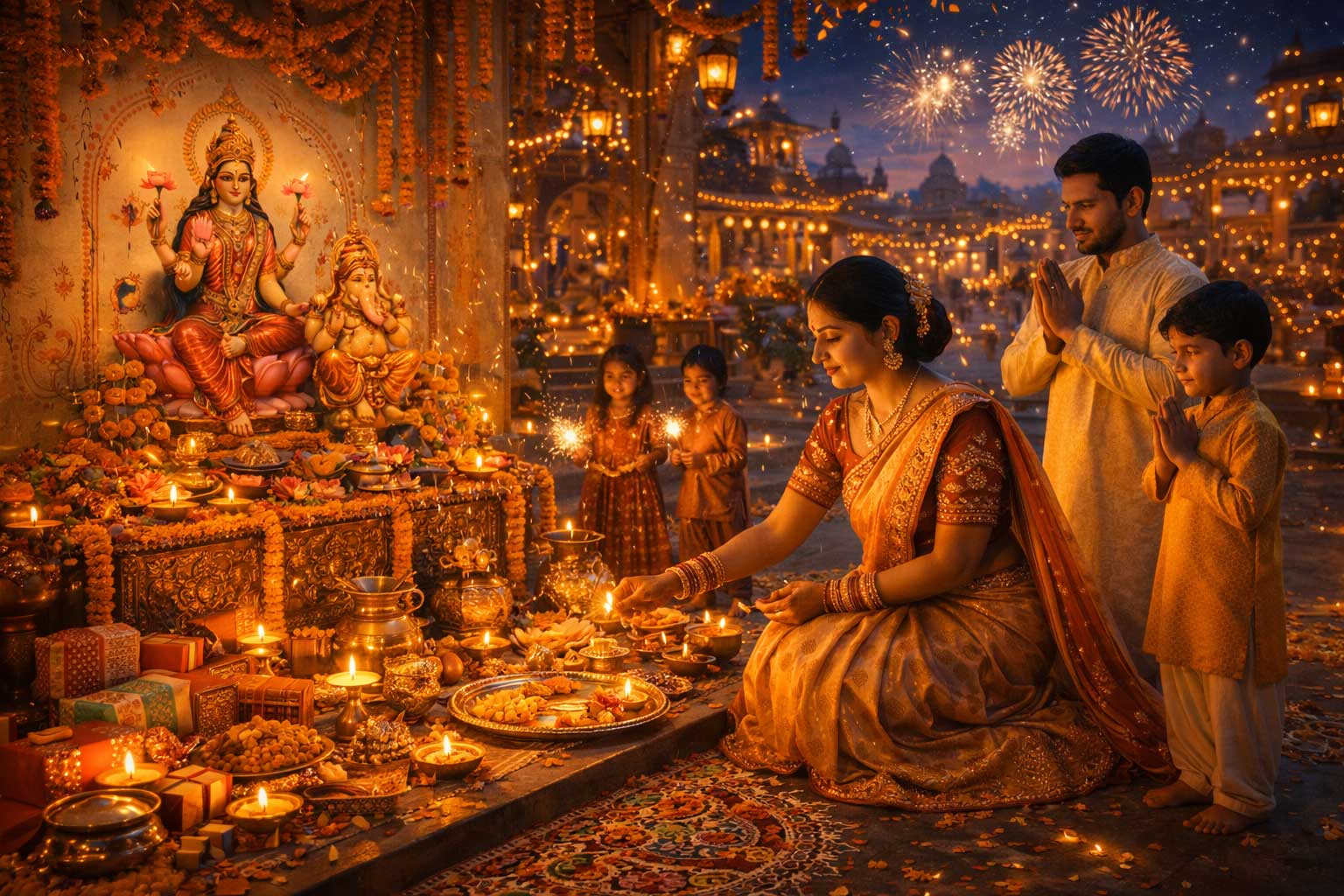
Diwali 2026
Diwali 2026: Date, Lakshmi Puja Shubh Muhurat, and Choghadiya Timings
In 2026, Diwali (Festival of Lights) will take place on Sunday, 8th November 2026 (Amavasya Tithi, Kartik Month). Millions celebrate this auspicious event as the day Lord Rama returned to Ayodhya after a long absence. While the festival is celebrated as a physical event, it also has an energetic component.

Never Miss a Critical Life Warning or Planetary Update!
We track planetary transits, dasha shifts, and auspicious timings so you don't have to. Get real-time alerts and remedies directly from Astrologer Neeraj Dhankher.
JOIN ASTRO ZINDAGI WHATSAPP CHANNELThe energy of wealth and abundance is elevated during this period; timing your prayers with the correct Shubh Muhurat can significantly increase your ability to manifest stable wealth.
For up-to-date information regarding daily planetary transits during the 5 days of Deepawali, see our Panchang or look at the Zodiac Predictions section for more information on how to utilise your stars to generate good fortune through this period.
Have a specific question about your chart this month?
General horoscopes give broad trends, but your personal Kundli holds the exact timeline for your career, finances, and relationships.
- Receive a personalised written analysis within 24 hours after payment verification.
- Direct guidance based on your exact birth details and current Dasha.
Diwali 2026: Shubh Muhurat & Tithi Timings
| Event | Timing / Tithi |
| Diwali Date | November 8, 2026 |
| Amavasya Tithi Begins | 11:27 AM on Nov 8, 2026 |
| Amavasya Tithi Ends | 12:31 PM on Nov 9, 2026 |
| Lakshmi Puja Muhurat | 05:54 PM to 07:50 PM |
| Pradosh Kaal | 05:31 PM to 08:09 PM |
| Vrishabha Kaal (Fixed Ascendant) | 05:54 PM to 07:50 PM |
| Mahanishita Kaal (Tantric Puja) | 11:39 PM to 12:31 AM (Nov 9) |
AstroZindagi Tip: On Diwali in 2026, take five cowrie shells (Kaudis), rub turmeric on them and worship them at your puja. You should tie these cowrie shells in a red cloth first thing in the morning, after the puja, and place them in the safe (or drawer) of your office.
This remedy will bring positive financial energy to your job or business throughout the year.
Astrological Significance of Diwali 2026
Diwali, or Deepawali, has great importance in Vedic astrology as well as in the Puranas. Traditionally, the festival of Diwali celebrates the victory of light over darkness and also marks the day on which Goddess Lakshmi was born from the churning of the ocean, or Samudra Manthan.
Astrologically, the conjunction of the Sun and Moon in Libra (Tula), ruled by Venus (the planet of luxury, pleasure, and beauty), at this lunar phase represents a perfect time for initiating new projects.
Diwali in 2026 is especially significant because it falls on a Sunday, and the Sun is the “Atmakaraka” (the significator of one’s soul), creating a favourable opportunity to gain confidence and success in your work and business activities. Lakshmi Puja Muhurat will create an environment conducive to long-term investments and business expansion.
The Vrishabha Kaal (the fixed ascendant) has “Sthir” (stable) energy; as a result, performing puja during this time will create a more stable environment for Goddess Lakshmi to be a permanent resident of your house, rather than going to and leaving your house.
Consequently, many business owners and homeowners are willing to set this time aside to perform their puja.
Traditional Way of Doing Lakshmi Puja on Diwali – Step-by-Step Format
The worship of Goddess Lakshmi on Diwali is a complex, lengthy ritual that involves offering one’s love or devotion to her and engaging in activities where the science of sound and vibration plays an important role.
How to Clean and Prepare: Before Goddess Lakshmi enters homes on Diwali, they need to be cleaned and made bright enough for her by see. On 8th November, before taking the morning bath, decorate your home’s entrance with colourful Rangoli and Torans made from Marigold flowers and Mango leaves.
Where to Begin the Puja (Sthapana): Use a red silk saree or cloth and place it on a raised platform for the purpose of placing the statue of Goddess Lakshmi and Lord Ganesha. When combined with Lord Ganesha, Goddess Lakshmi is thought to bless you with wealth with no barriers. You also need to place a “Kalash” (a brass, clay, or ceramic water pitcher) filled with water, a coin, and a betel nut within the vicinity of where you placed your statue.
The Puja Rituals: Lotus flowers (Kamal) should be offered to Goddess Lakshmi, as they are her favourite flowers. You could offer “Panchamrit” to Goddess Lakshmi when doing the puja (Panchamrit is a mixture of milk, curd, honey, sugar, and ghee). In addition to offering lotus flowers and Panchamrit, you will need to prepare Kheer or another yellow sweet as the “Bhog” (food offered to God). You will need a large ghee oil lamp (Deepak) that shall be lit during the puja and remain lit for the entire night.
Reciting of Mantras and Aarti: For this year’s puja, it is recommended to recite either the Shri Suktam or Kanadhara Stotram to Goddess Lakshmi. It is also highly recommended that you recite the Lakshmi Beej Mantra (sacred sound) at least 108 times in the year 2026: Om Shreem Hreem Shreem Kamale Kamalaalaye Praseed Praseed (translation: “Mother of All, residing in the Lotus Blossom, be pleased with me; bless me with prosperity.”)
Diwali 2026: Remedies for Your Zodiac Sign (Rashi Upay)
For Diwali 2026, here are Diwali Upays to align with your Moon sign and the energy of abundance.
Aries (Mesha): Light a mustard oil lamp at your front door and donate red sweets to those in need. This will strengthen Mars within you and provide financial stability.
Taurus (Vrishabha): Diwali falls on your Fixed Ascendant; therefore, make an offering of a silver coin to Shri Lakshmi and place it in your locker. You will attract luxury and comfort into your life.
Gemini (Mithuna): Offer green grass (Durva) to Lord Ganesha & donate green moong dal. This will eliminate your debts and increase your business communication skills.
Cancer (Karka): Offer a white lotus or white flower to the Goddess. By donating sweets made with milk, you will help keep your emotional and financial states in balance during the festive season.
Leo (Simha): Make your puja during the Simha Kaal time (12:25 AM – 2:42 AM). Offer honey and red sandalwood; this increases your professional authority.
Virgo (Kanya): Donate school supplies or books to children in need. This enhances your Mercury’s power, enabling you to make smarter investments.
Libra (Tula): Your sign’s ruling time is now; offer Ittar (perfume) and a white silk cloth to the Goddess to attract harmony and wealth into your life.
Scorpio (Vrishchika): Offer jaggery and roasted chickpeas. These items will prevent hidden enemies and ensure the continual flow of money into your life.
Sagittarius (Dhanu): Donate a yellow garment and saffron to a priest. This strengthens Jupiter energy, bringing you spiritual and material growth.
Capricorn (Makara): Light a sesame oil lamp under a Peepal tree in the evening. This will lessen the delays you have experienced from Saturn and provide career achievements.
Aquarius (Kumbha): Offer black sesame seeds and dry fruits to the Goddess. This will provide you with inventive ideas you can develop at work.
Pisces (Meena): Offer honey and yellow flowers as an offering. Focusing on your Guru while you meditate on Him during the puja will bring you peace and attract abundance.
Laxmi Puja Timings for Cities
The Laxmi Puja timings for each city on November 8, 2026, are as follows:
| City | Start Time | End Time |
| New Delhi / Noida / Gurgaon | 5:54 PM | 7:50 PM |
| Mumbai | 6:27 PM | 8:27 PM |
| Bengaluru | 6:17 PM | 8:20 PM |
| Kolkata | 5:20 PM | 7:18 PM |
| Pune | 6:24 PM | 8:24 PM |
| Ahmedabad | 6:22 PM | 8:20 PM |
| Chennai / Hyderabad | 6:07 PM | 8:09 PM |
Frequently Asked Questions (FAQs)
Can we do the Lakshmi Puja at home during the Mahanishita Kaal?
The Mahanishita Kaal (from 11:39 PM to 12:31 AM) is traditionally considered the time for performing “tantra” or high-level spiritual sadhanas. For householders, the best time to perform pujas is during the Pradosh Kaal or Vrishabha Kaal, which is after sunset or at least before the actual time of the puja.
What if I miss the evening Muhurat?
If you’ve missed the evening window, you can still perform the puja as part of the Night Muhurat (Labha) from 01:43 AM on 9th November until 03:22 AM on 9th November. However, the evening’s fixed ascendant is believed to be far more potent for making long-lasting financial blessings.
What is the significance of lighting 13/26 lamps?
In many cultures, lighting 13 lamps represents driving out the 13 types of evil energies. In addition, lighting lamps in all corners of your home on Diwali demonstrates that there are no dark areas for Alakshmi, the goddess of poverty, to inhabit in your home.
Can we eat while fasting for Diwali?
Most people fast until after completing the Lakshmi Puja, though they may consume phalahari (fruit and milk); once the puja is performed, a full family feast can begin.
Why do we worship Lord Ganesh along with Lakshmi?
Goddess Lakshmi, without Lord Ganesh, is not worshipped, as it is commonly accepted that wisdom (Ganesh) and the use of wisdom (Lakshmi) are necessary to utilise wealth properly. Worshipping Ganesh first provides us with the knowledge to use our wealth for good, and by doing so, we remove obstacles from our path.