




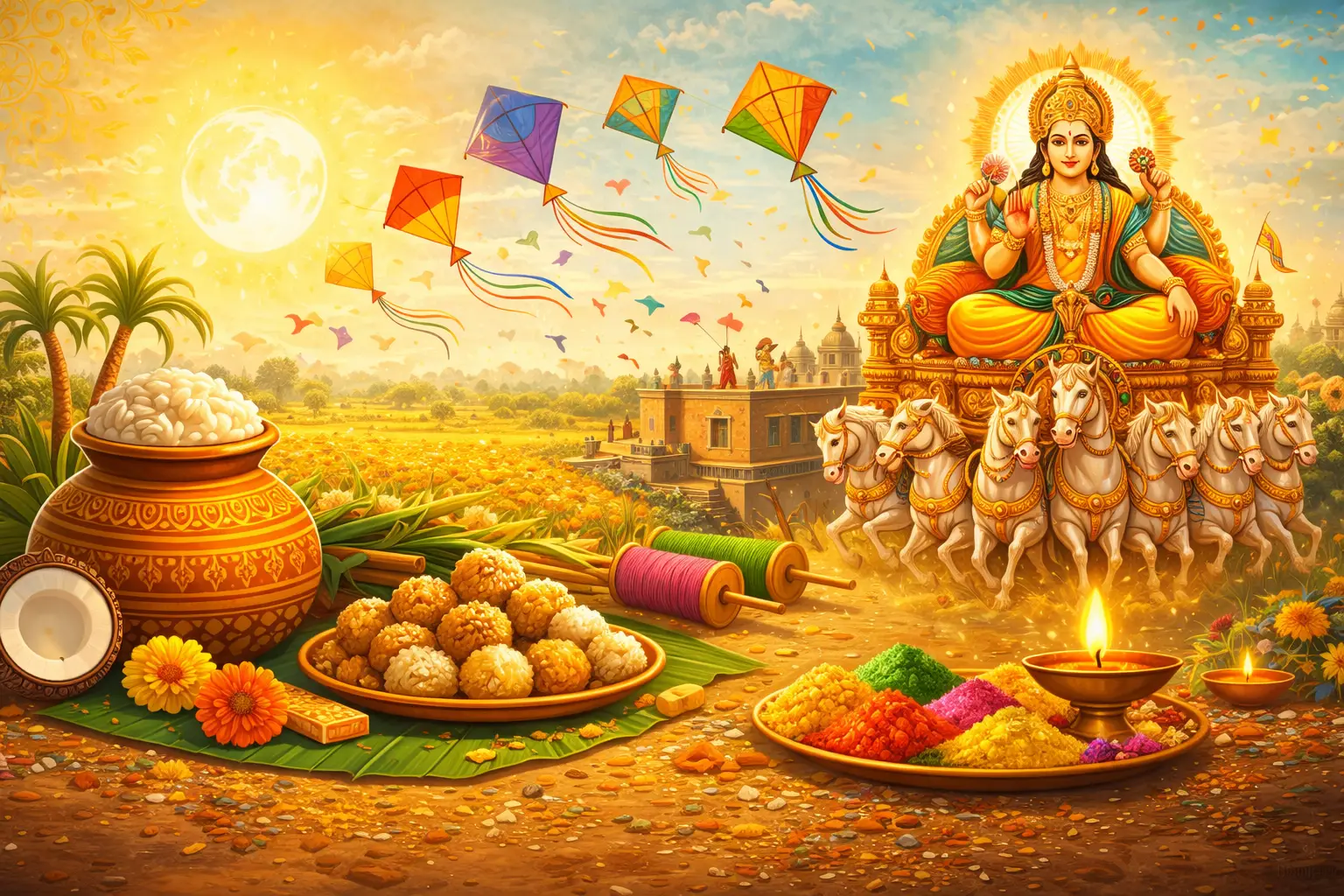
Makar Sankranti 2026: Date, Significance, Traditions, and Celebrations Across India
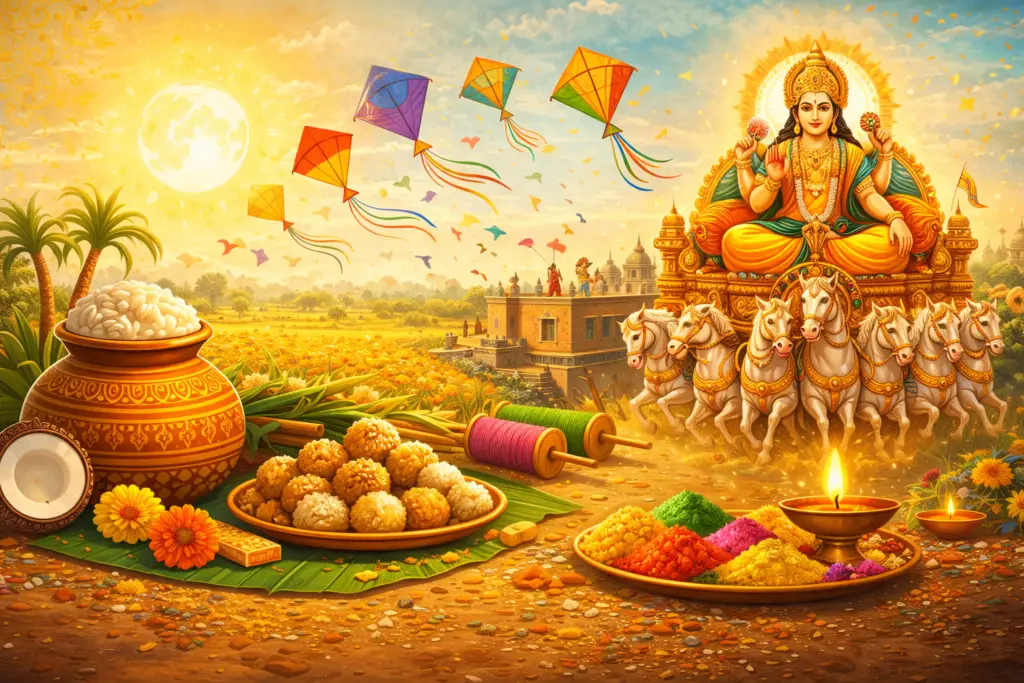
Makar Sankranti 2026 will be celebrated on Wednesday, 14 January 2026. It is one of the most important Hindu festivals that marks the transition of the Sun into the zodiac sign Makara (Capricorn). This celestial event signals the beginning of Uttarayana, the six-month period when the Sun moves northward. In Hindu tradition, this shift is considered highly auspicious and symbolises positivity, prosperity, and new beginnings.
Unlike many Indian festivals that follow the lunar calendar, Makar Sankranti is based on the solar calendar. Because of this, it usually falls on the same date each year, around 14 January. The festival holds deep cultural, religious, and agricultural significance, making it one of the most widely celebrated festivals across India.
Significance of Makar Sankranti
Makar Sankranti represents the end of the winter solstice and the arrival of longer days. In Hindu belief, this period marks the movement from darkness to light and from negativity to positivity. The beginning of Uttarayana is considered an ideal time for spiritual growth, charity, and religious activities.
According to Hindu scriptures, the six months of Uttarayana are highly sacred. Many devotees believe that actions performed during this period bring positive energy and spiritual benefits. It is also believed that souls who depart during this time attain higher spiritual liberation.
The festival also symbolises gratitude towards nature and the Sun God (Surya). Farmers thank the Sun for helping crops grow and celebrate the harvest season. Because of this connection with agriculture, Makar Sankranti is often referred to as a harvest festival.
Mythological Importance
Several mythological stories are associated with Makar Sankranti. One popular belief is that on this day Lord Surya visits the house of his son Shani, who rules the zodiac sign Capricorn. This meeting symbolises harmony and reconciliation between father and son.
Another legend states that Bhishma Pitamah from the Mahabharata chose to leave his body during the Uttarayana period because it was considered an auspicious time for attaining salvation. This belief strengthened the spiritual importance of Makar Sankranti.
Rituals and Traditions
Makar Sankranti is observed with various religious rituals and customs. Devotees wake up early in the morning and take a holy bath in sacred rivers such as the Ganga, Yamuna, or Godavari. Bathing in these rivers on this day is believed to cleanse sins and bring blessings.
Many people offer prayers to the Sun God by performing Surya Namaskar and offering water while chanting sacred mantras. Temples organise special prayers and rituals dedicated to Surya.
Charity also plays a major role during the festival. Devotees donate food, clothes, sesame seeds, jaggery, and blankets to the needy. In Hindu culture, daan (charitable giving) on Makar Sankranti is believed to bring good fortune and spiritual merit.
Special Foods of Makar Sankranti
Food is an important part of the celebration. Traditional dishes made from sesame seeds (til) and jaggery (gur) are widely prepared during the festival. These ingredients are considered beneficial during winter because they provide warmth and energy.
Popular festive foods include:
- Til ladoo
- Gajak
- Tilgul sweets
- Khichdi
- Pongal
- Chikki
In many regions, people exchange sweets and greet each other with messages that promote sweetness and harmony in relationships.
Regional Celebrations in India
Makar Sankranti is celebrated across India, but different states observe the festival with unique traditions and names.
In Tamil Nadu, the festival is celebrated as Pongal, a four-day harvest festival dedicated to the Sun God and agricultural prosperity.
In Punjab, people celebrate Lohri, which involves lighting bonfires, singing traditional songs, and enjoying festive foods.
In Gujarat and Rajasthan, the festival is famous for kite flying competitions. The sky becomes colourful as people gather on rooftops to fly kites throughout the day.
In Assam, the festival is called Magh Bihu, where communities celebrate with feasts, bonfires, and traditional dance.
In Uttar Pradesh and Bihar, devotees prepare khichdi and donate food to the poor, which is why the festival is also known as Khichdi Parv.
Spiritual Meaning of the Festival
Beyond the celebrations and traditions, Makar Sankranti carries a deeper spiritual message. The festival reminds people to move towards knowledge, positivity, and self-improvement. Just as the Sun begins its northward journey, individuals are encouraged to move towards growth and enlightenment in life.
The festival also emphasises unity and social harmony. Families and communities gather, share food, and celebrate together. This sense of togetherness strengthens relationships and spreads joy.
Why Makar Sankranti Remains Important Today
Even in modern times, Makar Sankranti continues to hold strong cultural and spiritual relevance. It connects people with nature, agriculture, tradition, and spirituality. The festival also encourages generosity, gratitude, and community bonding.
As people celebrate Makar Sankranti 2026, the festival serves as a reminder that light always follows darkness and that positive change is always possible. With prayers, charity, festive foods, and joyful gatherings, Makar Sankranti continues to bring hope and happiness to millions of people every year.