




Makar Sankranti 2026
Makar Sankranti is one of the most widely celebrated festivals in India, marking an important transition in the solar calendar. Unlike many Indian festivals that follow the lunar cycle, Makar Sankranti is based on the movement of the Sun. It commemorates the day when the Sun enters the zodiac sign Makara (Capricorn), signalling the end of the winter solstice period and the beginning of longer, warmer days. This astronomical shift symbolises light overcoming darkness and knowledge replacing ignorance.
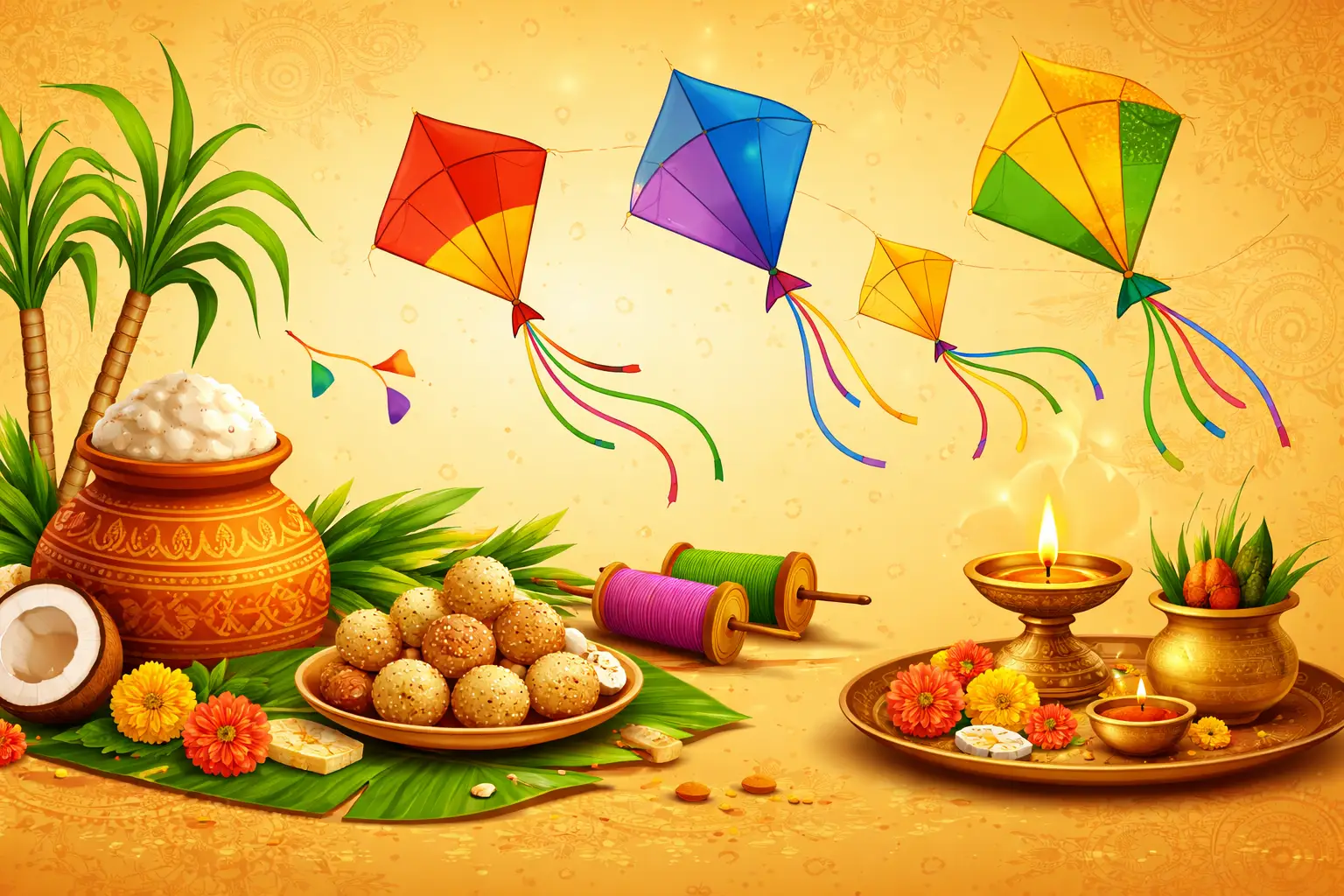
The festival usually falls on 14 January each year and is celebrated across India with different regional names and traditions. In Tamil Nadu, it is observed as Pongal, a four-day harvest celebration. In Punjab, it coincides with Lohri, a festival marked by bonfires, folk songs, and traditional foods. In Gujarat and Rajasthan, the day is famous for colourful kite-flying festivals, where the sky becomes a vibrant canvas of competing kites. Meanwhile, in Assam, the festival is known as Magh Bihu, celebrating the harvest with community feasts and traditional dances.
At its core, Makar Sankranti is a harvest festival. Farmers express gratitude to nature, the Sun, and the Earth for a successful harvest season. Freshly harvested crops such as rice, sugarcane, sesame seeds, and jaggery are used to prepare festive dishes. Foods made from til (sesame) and gur (jaggery) hold special significance. These ingredients symbolise warmth and energy during winter and are often shared with friends and family as a gesture of goodwill and harmony.
Another important spiritual aspect of Makar Sankranti is the belief that this period is highly auspicious for charity, prayer, and holy baths in sacred rivers. Devotees gather at pilgrimage sites such as Prayagraj, Haridwar, Varanasi, and Gangasagar to take ritual baths believed to cleanse sins and bring spiritual merit. Acts of daan (charity)—such as donating food, clothes, or money to the needy—are also considered particularly rewarding on this day.
Astrologically, the exact moment when the Sun enters Makara is called Sankranti, and certain time windows following this moment are considered highly auspicious for religious activities. These periods are known as Punya Kala and Maha Punya Kala, when performing rituals, prayers, and charitable acts is believed to yield maximum spiritual benefit.
Below are the key timings for Makar Sankranti in 2026:
| Event | Date / Time | Duration |
|---|---|---|
| Festival Date | Wednesday, 14 January 2026 | — |
| Makara Sankranti Moment | 03:13 PM | — |
| Punya Kala | 03:13 PM – 05:45 PM | 2 Hours 32 Minutes |
| Maha Punya Kala | 03:13 PM – 04:58 PM | 1 Hour 45 Minutes |
These timings help devotees determine the most favourable period to perform rituals, offer prayers to the Sun God, and carry out acts of charity.
Beyond its religious and agricultural significance, Makar Sankranti also strengthens community bonds and cultural identity. Families gather, exchange sweets, and visit relatives. Traditional greetings often emphasise sweetness and harmony in relationships, reflecting the symbolic message of the festival—spreading warmth, positivity, and goodwill.
The festival also marks the beginning of an important phase in the Hindu calendar known as Uttarayana, when the Sun begins its northward journey. This period is considered highly auspicious in Hindu philosophy. Many scriptures mention Uttarayana as a spiritually favourable time for new beginnings, learning, and righteous actions.
In essence, Makar Sankranti represents a beautiful blend of astronomy, agriculture, spirituality, and cultural celebration. It reminds people to honour nature, express gratitude for abundance, and move forward with renewed optimism as the Sun ushers in longer days and brighter possibilities.